Author: odorami

  • The Precision of the Plant: Why Every Oil Travels a Different Path

    The Principle Behind the Precision

    Every botanical essential oil is the concentrated molecular expression of the specific plant’s relationship with its specific ecological conditions: where it grew, what mineral and biological intelligence it drew from its specific soil, how it managed the specific pressures of its specific altitude and climate, what challenges it evolved to meet and what specific intelligence it developed in meeting them.

    These ecological factors are not incidental to the oil’s effects on the human organism. They are the direct determinants of the oil’s molecular profile — and the molecular profile is what determines the destination.

    A plant that evolved at high altitude, in thin air, with extreme temperature variation and intense solar radiation, develops molecular compounds that are themselves high-altitude in character: light, volatile, refined, carrying the specific intelligence of what has been distilled by extreme conditions into its most essential and most elevated form. When these molecules enter the human olfactory system, they travel to the system’s own upper registers — the higher brain centres, the outermost layers of the body’s energetic field.

    A plant that evolved deep in the earth, drawing its nourishment from the dense, mineral-rich soil of a specific place over years or decades, develops molecular compounds that are themselves earth-bound: heavy, complex, gravitational, carrying the specific intelligence of deep rootedness and the specific weight of accumulated mineral wisdom. When these molecules enter the olfactory system, they bypass the lighter upper registers and travel directly to the physical nervous system’s deepest grounding architecture.

    The plant’s own orientation — upward or downward, expansive or rooting, clearing or holding — is encoded in its molecular profile and delivered, with remarkable precision, to the corresponding architecture within the human system.

    The Four Primary Pathways

    Pathway One — The High-Altitude Transmitters: Upper Brain, Spiritual Layer

    The aromatic families most associated with the upper pathway are the ancient sacred resins — Frankincense, Myrrh, Elemi — and the high-altitude conifers — Silver Fir, Cypress, Juniper. Their molecular profiles are characterised by specific compounds — incensole acetate in Frankincense, specific sesquiterpenes in Myrrh — that engage the limbic brain’s upper processing centres with documented specificity.

    The destination of the high-altitude transmitters is the uppermost layer of the human system: what biophysical researchers describe as the body’s electromagnetic field at its furthest extent, what contemplative traditions describe as the spiritual or causal layer, and what neuroscientists are beginning to understand as the specific neural architecture associated with expanded states of consciousness, meaning-making, and the sense of connection to something larger than the individual.

    Etheris — Odorami’s frequency of Sacred Spaciousness, formulated with Boswellia sacra, Elemi, and Sandalwood — carries the high-altitude transmission with its greatest precision and depth. Applied to the third eye and crown, it delivers the specific neurological and energetic clearing that the upper pathway is designed to produce: the widening of the interior atmosphere, the quieting of the habitual mental static, and the specific quality of elevated, expanded awareness that four thousand years of human sacred tradition have consistently associated with these botanical families.

    The quality of its effect in the body: a quality of interior spaciousness in the upper skull and chest — the felt sense of more room above, of a ceiling that has risen, of something that was congested having been cleared.

    Pathway Two — The Heart Resonators: Emotional Layer, Heart Field

    The botanical families that travel the heart pathway are the soft, complex florals and the heart-centred light botanicals: Rose, Neroli, Jasmine, Ylang Ylang, Geranium, Bergamot. Their molecular profiles — high in geraniol, citronellol, linalool, and phenylethyl alcohol — engage the limbic system’s emotional processing centres with a specific orientation toward the heart field: the electromagnetic field generated by the heart muscle, which HeartMath Institute research has documented extending several feet from the body and carrying specific information about emotional state.

    The destination of the heart resonators is the emotional body — the fluid, relational, feeling dimension of the human system — and specifically the places where emotional content has become held rather than flowing: the protected grief, the armoured heart, the unexpressed love or longing or compassion that has calcified through insufficient permission to move.

    The heart resonators do not remove the difficulty. They create what practitioners consistently describe as a buffer of warmth around the heart field: the specific quality of safety within which held emotional content can begin to move rather than remaining defended against.

    The quality of its effect in the body: a fractional softening in the sternum and upper chest — the felt sense of something that was held tightly being, very gradually, permitted to breathe.

    Pathway Three — The Mental Clarifiers: Cognitive Centres, Solar Plexus

    The botanical families that travel the mental pathway are the sharp, high-frequency clarifying aromatics: Peppermint, Rosemary, Lemon, Eucalyptus, Lemon Myrtle, Spearmint. Their molecular profiles — high in menthol, 1,8-cineole, limonene — engage the upper nervous system’s cognitive processing architecture with documented specificity for working memory, attentional focus, and the specific quality of mental sharpness that chronic fatigue and information overload degrade.

    The destination of the mental clarifiers is the cognitive architecture of the upper brain and the solar plexus — the body’s centre of directed, purposeful action, associated in the body’s energetic anatomy with the will, personal power, and the capacity for grounded, clear decision-making. When the mental atmosphere is congested with circular thinking, information overload, or the specific fog of sustained digital processing, the clarifying botanicals cut through this congestion with the molecular equivalent of a clear wind through a closed room: not adding new content to the field but removing the interference that was preventing genuine clarity from emerging.

    The quality of its effect in the body: a sharpening in the quality of attention — the felt sense of a cleaner, more linear quality of thought becoming briefly available — and often a simultaneous slight activation in the solar plexus: the return of a sense of directional energy and capacity.

    Pathway Four — The Dense Stabilizers: Root Architecture, Physical Nervous System

    The botanical families that travel the root pathway are the heavy, earth-dense, gravitationally present aromatics: Vetiver, Spikenard, Patchouli, Cedarwood, Myrrh, Copaiba. Their molecular profiles are dominated by heavy sesquiterpenes and complex resinous compounds whose molecular weight is among the highest in botanical distillation — and this molecular weight is directly correlated with their physiological destination.

    These dense molecules bypass the lighter upper layers entirely. They do not linger in the spiritual or mental architecture or expand through the emotional field. They head directly to the physical nervous system’s deepest grounding infrastructure: the autonomic nervous system’s parasympathetic architecture, the HPA axis’s stress-hormone regulation system, and the specific somatic experience of being genuinely, heavyly, safely present in the physical body.

    The destination of the dense stabilizers is the body’s most foundational layer: the physical nervous system’s capacity to register that genuine safety is present and that the sustained survival-mode activation that has been maintained as a precaution can be safely released. This is the botanicals’ most ancient and most basic function in relationship with the human organism — telling the body, through molecular weight and specific chemical composition, what no amount of thinking or convincing can effectively communicate: you may rest now. The ground is here.

    The quality of its effect in the body: a quality of weight and downward movement — the felt sense of awareness being pulled from the congested upper registers back into the lower body, the feet, and the floor. The specific relief of landing.

    Why Precision Matters More Than Pleasantness

    The most significant practical implication of the four pathways is this: the correct oil for your current need is not necessarily the oil you like best, the oil that smells most pleasant, or the oil you have been using for years because it produced relief at some previous point.

    It is the oil whose specific molecular pathway most precisely addresses the specific destination where your system’s current imbalance is actually located.

    A system that is scattered, floating, and cognitively overwhelmed does not need the heart resonators — however beautiful their fragrance. It needs the mental clarifiers or the dense stabilizers, depending on whether the primary imbalance is in the upper cognitive architecture or in the physical nervous system’s activation level.

    A system that is emotionally defended and holding its heart contracted against further disappointment does not need the high-altitude transmitters, however expansive their effect on the upper layers. It needs the heart resonators — specifically, the specific botanical intelligence that creates the safety within which the defended emotional content can begin to move.

    This precision — matching the botanical pathway to the actual architectural destination of the imbalance — is what transforms aromatic practice from the pleasant management of symptoms into the precise navigation of the inner world that genuine aromatic intelligence makes possible.

    The Four Pathways: A Reference

    The Pathway

    The Botanical Families

    The Destination

    The Quality in the Body

    High-Altitude TransmittersSacred resins — Frankincense, Myrrh, Elemi; high-altitude conifersSpiritual layer; upper brain centres; the pineal-pituitary complexInterior spaciousness; the ceiling rising; mental static clearing; the vertical channel opening

    Heart ResonatorsSoft florals — Rose, Neroli, Jasmine; heart-centred citrus — BergamotEmotional body; heart field; the places where feeling has become heldA buffer of warmth in the sternum; the held thing being gently permitted to breathe

    Mental ClarifiersSharp herbs — Peppermint, Rosemary; clarifying citrus — Lemon, EucalyptusCognitive architecture; solar plexus; the will and directed actionSharpened attention; the fog thinning; the return of a sense of directional capacity

    Dense StabilizersDeep roots — Vetiver, Spikenard; earth resins — Patchouli, CedarwoodPhysical nervous system; the body’s grounding infrastructure; the parasympathetic architectureWeight; downward movement; the return of awareness to the body; the specific relief of landing

    Questions You Might Whisper to a Friend

    “Why does Frankincense work for some people and do nothing for others?”

    Because whether Frankincense’s high-altitude transmission finds a receptive destination depends on the current state of the upper layer it is designed to address. A system that is genuinely blocked or congested in the spiritual and upper mental layers — where the connection to meaning, purpose, and expanded awareness has been disrupted — will experience Frankincense’s upper-layer clearing as immediate and significant relief: the specific quality of something important having been restored. A system that is already relatively clear in those upper layers but is significantly distressed at the physical nervous system level will experience Frankincense’s upper-layer work as pleasant but somehow not quite reaching the place where the help is most urgently needed — because the upper pathway is not where the most acute imbalance is currently located. The oil has not failed. The destination it is calibrated to serve is simply not the one most urgently in need of attention right now.

    “Can I use oils from different pathways together?”

    Yes — and the most sophisticated aromatic practices typically sequence across pathways rather than using a single pathway in isolation. The most effective sequencing is typically: dense stabilizer first (to establish the somatic ground), then heart resonator (to create the emotional safety within which the upper work can land), then high-altitude transmitter (to provide the expanded perspective from a grounded and emotionally safe base). This sequence — ground, soften, expand — reflects the natural progression from the most physically immediate need (safety in the body) through the emotional field to the upper layers where genuine clarity and expanded awareness become most available when the lower foundations are genuinely in place. Skipping the lower steps and going directly to the high-altitude transmitters is possible and produces genuine effects — but those effects tend to be less integrated and less lasting when the physical and emotional foundations have not first been established.

    “How do I know which pathway my system is currently most in need of?”

    By attending to the somatic quality of the current difficulty rather than its narrative content. Upper-layer imbalances tend to feel like loss of direction, meaning, or the capacity for genuine perspective: the experience is primarily in the quality of consciousness rather than in the body or the emotions. Heart-layer imbalances tend to feel like heaviness or defended contractedness in the chest: something held, something armoured, something that cannot quite open. Mental-layer imbalances tend to feel like cognitive fog, circular thinking, or the specific flatness of intellectual exhaustion: the quality of the thinking process itself has become compromised. Physical-layer imbalances tend to feel like the body — specifically the nervous system — not genuinely settling regardless of rest or intention: the activation that will not quite cease, the weight that does not reduce, the specific sense of the body being permanently on guard. The pathway whose description produces the most immediate somatic recognition of yes, that is what this feels like is typically the pathway whose botanical allies are most immediately relevant.

    Written by Sasathorn Nasongkhla, Founder of Odorami Scent Alchemy. Sasathorn Nasongkhla has spent 30 years studying the intersection of botanical intelligence, nervous system regulation, and soul archetypes, guiding seekers toward their own scent frequency through the practice of scent alchemy.


  • Grounding Through Scent: How to Resettle a Racing Mind

    Grounding Through Scent: How to Resettle a Racing Mind

    Grounding Through Scent: How to Resettle a Racing Mind

    To resettle a racing mind, you must shift your awareness from abstract thoughts back into the physical body through somatic grounding. This process is most effectively achieved by utilizing high-density botanical scents like roots and resins, which interact directly with the limbic system to bypass cognitive resistance. At Odorami, we view this as a “system sync,” where the molecular signatures of the earth anchor your personal frequency back into its natural, steady alignment.

    Why Your Mind Needs the Body to Slow Down

    A racing mind is a physiological signal that your consciousness has migrated entirely into the “upper” regions of your experience, leaving the body feeling untethered. Unlike all other senses, smell is the only one with a direct neural pathway to the limbic system (the emotional brain—the part that processes feeling before logic can)—bypassing the thalamus entirely. This is why an olfactory trigger can produce an emotional response and somatic (felt in the body, not just understood in the mind) grounding before conscious thought occurs.

    The Pillars of the Soil: Oils for Somatic Grounding

    To achieve calibration—bringing your nervous system back into its natural alignment, like tuning an instrument—we look to the plants that live closest to the earth:

    Vetiver (The Root of Stillness): A complex root system that serves as the ultimate anchor for a mind that feels “thin.”

    Patchouli (The Earth’s Embrace): A deep, mineral-rich scent that provides a sense of physical weight and presence.

    Spikenard (The Ancient Ground): A high-altitude root used for millennia to settle the spirit. Historically, spikenard was so valued that it was mentioned in various ancient texts for its profound sedative properties.

    Comparative Grounding Mechanisms

    BotanicalPrimary Spiritual FunctionSomatic EffectBest Application

    VetiverEmotional StillnessReduces cortisol/racing pulseSoles of the feet

    PatchouliPhysical PresenceSensory “weighting”Lower abdomen

    SpikenardAncient Ancestral LinkDeep nervous system settlingAnkles or base of spine

    The “Earth Anchor” Practice

    Drop & Touch: Place a drop of a grounding oil on the soles of your feet.

    The Press: Stand firmly. Imagine roots growing from your heels into the soil.

    The Breath of the Earth: Inhale the scent, feeling its “weight” settle in your lower abdomen.

    FAQ: Common Questions on Grounding

    Which essential oil is best for an overactive nervous system?

    Vetiver is widely considered the most effective oil for an overactive nervous system due to its heavy molecular structure and grounding frequency. It acts as a “system sync” that pulls energy away from a racing mind and back into the physical body.

    How long does it take for scent to affect the brain?

    A 2014 study found that inhaled essential oils can produce measurable changes in the body, such as reduced cortisol levels, within 10 minutes of exposure. Because scent bypasses the thinking mind, the emotional shift often begins in even less time.

    ———————————————————-

    Written by Sasathorn Nasongkhla, Founder of Odorami Scent Alchemy. Sasathorn has spent 30 years studying the intersection of botanical intelligence, nervous system regulation, and soul archetypes, guiding seekers toward their own scent frequency.

  • The Anatomy of a Scent-Based Pause: Calibrating Your Nervous System in 60 Seconds

    The Anatomy of a Scent-Based Pause: Calibrating Your Nervous System in 60 Seconds

    The Anatomy of a Scent-Based Pause: Calibrating Your Nervous System in 60 Seconds

    In our high-frequency digital world, we are often told that “self-care” requires an hour on a yoga mat or a weekend retreat. But for a nervous system under constant pressure, the most effective healing doesn’t happen in an hour—it happens in the pause.

    If you are feeling the “buzz” of digital fatigue or the tight chest of a looming deadline, you don’t need a getaway. You need a calibration.

    What is a “Scent-Based Pause”?

    At Odorami, we look at the sense of smell as a “backdoor” to the brain. Unlike sight or touch, which must be processed by the thinking mind first, scent travels directly to the limbic system—the emotional and survival center of your body.

    When we talk about the Vagus Nerve (the main highway of your parasympathetic nervous system), we are talking about your body’s ability to move from “High Alert” back to “Safety.” A scent-based pause is a 60-second intervention that uses botanical frequencies to signal to your Vagus Nerve that the “threat” is over.

    The 60-Second Calibration Sequence

    You can do this at your desk, in your car, or between meetings. It is a moment of Sensory Architecture—rebuilding your internal space in real-time.

    1. The Opening (0-15 Seconds)

    Choose an oil that feels “sturdy” to you—perhaps a Hinoki, a Black Spruce, or a deep Frankincense. Place one drop on a tissue or your palm. Do not bring it to your nose yet. Place your hands on your lap and feel your feet on the floor. This is the Somatic Handshake.

    2. The Invitation (15-45 Seconds)

    Slowly bring the scent toward you. Instead of taking a “big, aggressive sniff,” imagine you are invited to a garden. Let the aroma come to you.

    The Technique: Inhale for a count of 4, and exhale for a count of 6.

    The Science: The longer exhale is the physiological trigger that “flips the switch” on the Vagus Nerve, moving you out of fight-or-flight.

    3. The Recognition (45-60 Seconds)

    Notice where the scent lands. Does your throat soften? Do your shoulders drop an inch? This is the Internal Landscape shifting. You aren’t just smelling a plant; you are rearranging your internal furniture to create more room for your soul to breathe.

    Why “Calibration” Matters More Than “Relaxation”

    Most people try to “relax,” which feels like a heavy task when you are busy. Calibration is different. Calibration is like tuning a musical instrument. You aren’t changing the song; you are simply ensuring the strings are at the right tension so the music sounds clear again.

    When you use scent to calibrate, you aren’t checking out of your life. You are checking back into your body. ## Building Your Personal Sanctuary The more often you practice the 60-second pause, the more your nervous system recognizes the scent as a “Code for Safety.” Eventually, just opening the bottle will begin the calibration process before the oil even reaches your nose.

    You are the Spiral Architect of your own day. You have the power to redesign your state of being, one breath at a time.

  • Beyond Stress Management: How Scent Helps End the Burnout Cycle

    Beyond Stress Management: How Scent Helps End the Burnout Cycle

    Beyond Stress Management: Using Olfactory Safety to End the Burnout Cycle

    We live in a culture that treats “stress” as a badge of honor and “management” as the only solution. We are told to manage our calendars, manage our diets, and manage our emotions. But if you have ever felt the hollow, bone-deep exhaustion of burnout, you know that “management” is no longer enough.

    Management is about holding it together while the storm rages. Olfactory Safety is about ending the storm from the inside out.

    Why “Stress Management” Often Fails

    The problem with traditional stress management is that it is a cognitive (thinking) approach to a somatic (body) problem. You cannot “think” your way out of burnout because your nervous system has already retreated into a survival bunker.

    When you are in the burnout cycle, your brain is constantly scanning for threats. Even “relaxing” activities can feel like another chore on your to-do list. To break the cycle, we don’t need more tasks; we need a Sensory Reset.

    The Concept of Olfactory Safety

    At Odorami, we teach that the nose is the guardian of the nervous system. Olfactory Safety is the state where your body receives a specific scent frequency and instantly recognizes it as “home.”

    When your brain detects a “Safe Scent,” it sends a signal to the amygdala: “You can stop scanning now. The perimeter is secure.” This is the bridge from a state of survival to a state of Embodiment.

    How to Use Scent to Break the Burnout Loop

    Burnout is a loop of “Always On.” To break it, you must introduce a frequency that the burnout cannot coexist with.

    1. Identify Your “Anchor Frequency”

    In my work with Sensory Architecture, I have found that people in burnout don’t need high-energy citrus or complex perfumes. They need “Primary Frequencies.”

    The Soil (Vetiver or Patchouli): These scents remind the body of the Earth. They provide a “downward” energy that pulls you out of your overactive head and back into your feet.

    The Resin (Myrrh or Copaiba): These are the “healers” of the tree. They provide a protective, cushioning frequency that feels like a warm embrace for a tired spirit.

    2. Create a “Sensory Boundary”

    If your burnout is caused by work, do not use your “Safety Scent” while you are working. Keep it sacred. Use it only when you transition out of work mode. This creates a psychological and physiological “wall” between your labor and your life.

    3. The Ritual of Re-Emergence

    Instead of waiting for the weekend to recover, use scent to create “Micro-Recoveries” throughout the day. A 30-second encounter with a Pillar Oil can prevent your stress from accumulating into full-blown burnout.

    From Survival to the Living Spectrum

    The goal is not just to “survive” your week. The goal is to move into the Living Spectrum—a state where you are sensitive, awake, and regulated.

    When you establish Olfactory Safety, you stop managing a crisis and start architecting a life. You move from the friction of “trying to cope” to the flow of “being.”

  • Why “Calming” Essential Oils Don’t Always Work (And What Your Body is Actually Asking For)

    Why “Calming” Essential Oils Don’t Always Work (And What Your Body is Actually Asking For)

    Why “Calming” Essential Oils Don’t Always Work (And What Your Body is Actually Asking For)

    We have been told the same story for decades: If you are stressed, use Lavender. If you can’t sleep, use Chamomile. But have you ever reached for a “calming” oil during a period of intense overwhelm, only to find that the scent felt intrusive, irritating, or even made your heart race faster?

    If this has happened to you, I want you to take a deep breath: You aren’t doing it wrong, and there is nothing wrong with your nose. In fact, your nervous system is doing exactly what it was designed to do. It is communicating its current “geography.”

    The Myth of the “One-Size-Fits-All” Calm

    In the world of generic wellness, essential oils are often treated like light switches—flick one on for sleep, flick another for energy. But at Odorami, we look at scent through the lens of Scent Alchemy and Sensory Architecture.

    Your nervous system is not a machine; it is a landscape.

    When you are in a state of “High Functional Freeze”—that feeling of being exhausted but your mind is still racing at 100 mph—a sweet, floral oil like Lavender can feel like a heavy blanket being thrown over a person who is trying to run. Your body perceives the “forced calm” as a threat to its survival. It doesn’t want to be suppressed; it wants to feel safe.

    Sensory Safety: The Somatic Handshake

    I often refer to the first moment of smelling an oil as a “Somatic Handshake.” It is a meeting of frequencies.

    If your internal landscape is currently a storm, a delicate flower cannot anchor you. You don’t need “relaxation” yet—you need Structure. This is why many people who struggle with anxiety or burnout find themselves rejecting traditional “calming” oils. Their body is actually asking for the strength of a tree or the ancient stillness of a resin. They aren’t looking for a lullaby; they are looking for a pillar to lean on.

    What to Use Instead: The Architecture of Grounding

    If “calming” oils feel like they are “too much” for you right now, I invite you to explore the Pillar Oils. These are scents that provide a sense of perimeter and boundary rather than forced sedation:Frankincense (Sacra or Carterii): Think of this as the “Architect.” It doesn’t force your breath to slow down; it simply clears the air so that a deep breath becomes possible again.

    Cedarwood or Sandalwood: These provide “Woody Grounding.” They offer the nervous system a sense of being held by something old, sturdy, and unshakeable.

    Vetiver: For when you feel “flighty” or disconnected from your body. It is the literal root, pulling your energy back down into the earth.

    A 60-Second Calibration Ritual

    Before you apply an oil today, try this Odorami Check-In:The Distance Test: Place a drop of oil on a tissue. Start with the tissue at your waist.

    The Approach: Slowly bring it closer to your nose.

    The Listen: Notice the exact moment your body says “Stop.” This is your Sensory Boundary.

    The Recognition: If the scent feels like a “No” today, honor that. Your body is telling you it needs a different frequency.

    Moving Toward Self-Understanding

    At Odorami, we don’t use scent to “fix” symptoms. we use scent to read the internal landscape. When you stop trying to force yourself to feel “calm” and start listening to why certain scents repel or attract you, you begin the journey of true embodiment. You aren’t just smelling an oil; you are meeting yourself.

  • Why Your Workspace Feels Draining: A Guide to Sensory Decluttering

    Why Your Workspace Feels Draining: A Guide to Sensory Decluttering

    Why Your Workspace Feels Draining: A Guide to Sensory Decluttering

    Do you ever finish a day of work feeling completely depleted, even if you spent the entire day sitting in a comfortable chair? You’ve closed your tabs, finished your meetings, and cleared your desk, yet your mind still feels “heavy” and your body feels “buzzy.”

    This is often because we focus on physical clutter—piles of paper or unwashed mugs—while ignoring Sensory Clutter. In our high-frequency digital age, our workspaces are often filled with invisible noise that drains our nervous system’s battery without us even realizing it.

    The Invisible Drain: What is Sensory Clutter?

    Sensory clutter is the accumulation of “static” in your environment. It’s the blue light from your screens, the hum of the air conditioner, the notification pings, and—most importantly—the lack of a grounding sensory anchor.

    When your workspace lacks a intentional “scent architecture,” your brain is forced to process every random smell, sound, and light flicker as a potential distraction. This constant processing is what leads to Digital Fatigue.

    How to “Declutter” Your Senses

    To reclaim your energy, you don’t just need a cleaner desk; you need a Sensory Reset. Here is how to architect a workspace that gives back more energy than it takes:

    1. Clear the “Olfactory Static”

    Before you start your deep work, clear the air. If you’ve been eating at your desk or if the room feels “stale,” your brain perceives that stagnancy.

    The Action: Open a window for two minutes or use a clearing mist with Citrus or Peppermint. This signals to your brain that the “old” energy of the morning is gone and a new “Focus Node” is beginning.

    2. Introduce a “Focus Pillar”

    In Sensory Architecture, we use specific scents to act as pillars for the mind. These aren’t just “nice smells”; they are cognitive anchors.

    The Recommendation: Use Rosemary or Lemon Myrtle.

    The Science: These high-frequency scents are known to support cognitive function and memory. By using them only when you work, you create a “Sensory Boundary.” Your brain eventually learns: When I smell Rosemary, it is time for deep focus.

    3. Manage the “Digital Buzz”

    Digital work happens in the “air”—it is abstract and ungrounded. To counter this, you need a physical anchor on your desk.

    The Action: Keep a small piece of wood, a stone from a place you love, or a bottle of a deep root oil like Vetiver. When you feel your mind starting to “float” or fray, take a 30-second pause to touch the object or inhale the grounding oil. This is a Somatic Handshake that pulls you back into your body.

    From Friction to Flow

    A decluttered workspace isn’t just about what you remove; it’s about what you intentionally place. When you remove the sensory friction, your work moves from a place of “trying” to a place of flow. You aren’t fighting your environment anymore; you are being supported by it.

    You Are Part of a Living Network

    You are not an isolated island; you are like a tree in a vast, interconnected forest. I call this collective space the Digital Garden. Just as one healthy tree helps stabilize the soil for the entire forest, your choice to stay grounded and focused in your workspace helps stabilize the world around you. When you move from a “drained” state to a “settled” one, the quality of your work and your digital interactions begins to shift, too. You aren’t just tending to your own productivity; you are tending to our shared garden.

  • The Use of Scent In Death Rituals

    The Use of Scent In Death Rituals

    The use of scent in rituals and traditions surrounding death, funerals, and the crossing over of the deceased is a practice deeply rooted in various cultures and religions across the world. Scent plays a significant role in these rituals, serving as a means to honor, comfort, and spiritually guide both the living and the departed.

    Incense and Aromatics in Rituals

    Incense has been a common element in death and funeral rituals for centuries. The burning of incense serves several purposes:Purification: Incense is believed to purify the space where the deceased is laid to rest or where memorial ceremonies are held. It cleanses the atmosphere, removing negative energies and creating a spiritually conducive environment.

    Communication: In many cultures, the smoke from incense is seen as a medium through which prayers and messages can be sent to the departed. It symbolizes a connection between the physical world and the spiritual realm.

    Comfort: The fragrance of incense can provide solace and comfort to grieving family members and friends. It is thought to ease emotional pain and offer a sense of peace.

    Guidance: In some belief systems, incense is used to guide the soul of the deceased to the afterlife. The scent is believed to act as a beacon, helping the soul navigate its journey.

    Specific Scents and Their Meanings

    The choice of incense or aromatic herbs can vary depending on cultural and religious traditions. Here are a few examples:Sandalwood: Commonly used in Hindu and Buddhist funerals, sandalwood incense is known for its calming and purifying properties. It is believed to aid in the soul’s transition to the afterlife.

    Myrrh and Frankincense: These resins have been used in various religious traditions, including Christianity. They symbolize offerings to deities and can also represent the gifts of the Magi to the baby Jesus.

    Lavender: In some Western cultures, lavender is associated with funerals and memorial services. Its calming aroma is thought to bring peace and tranquility to the mourners.

    Benzoin: Often used in Islamic funeral rites, benzoin resin is believed to purify the body and create a sacred atmosphere during the ritual washing of the deceased.

    Juniper and Cedar: These fragrances are used by some Native American tribes in purification ceremonies. They are believed to help cleanse the spirit and guide it to the spirit world.

    Personalized and Cultural Variations

    While there are commonalities in the use of scent in death rituals, there are also numerous personalized and culturally specific variations. Some cultures may use local flowers, herbs, or other fragrant materials to create unique rituals that reflect their beliefs and customs.

    In essence, scent serves as a bridge between the physical and spiritual realms during times of loss and mourning. It offers comfort, guidance, and a means of honoring and remembering the departed. Regardless of cultural or religious differences, the use of scent in rituals surrounding death underscores the universal human need to navigate the profound mysteries of life, death, and the afterlife with reverence and compassion.

  • The Ancient Roots of Scent Alchemy

    The Ancient Roots of Scent Alchemy: A Journey through Time

    Exploring the Timeless Connection between Scent, Alchemy, and Personal Transformation

    As we embark on a journey into the world of Scent Alchemy, it’s essential to understand that the practice of using scent for transformation is not a recent discovery. Instead, it’s deeply rooted in the annals of history, dating back to ancient civilizations where scent and alchemy intertwined to unlock the secrets of personal and spiritual growth.

    The Scented Trails of Ancient Egypt

    Our voyage into the world of Scent Alchemy begins in ancient Egypt, a civilization renowned for its fascination with fragrances. In the land of the pharaohs, aromatic plants and resins were cherished not only for their pleasant scents but also for their profound spiritual significance.

    Ancient Egyptians believed that fragrances held the power to connect the physical world with the divine. They used scents in religious rituals, believing that the aromatic smoke from incense and the application of fragrant oils could bridge the gap between mortals and gods. This practice, in essence, was an early form of scent alchemy—a quest to transform and elevate the human spirit.

    Scent Alchemy in Ancient India: Ayurveda and Beyond

    In the ancient traditions of India, particularly within Ayurveda, the use of scent as a healing and transformative tool was prevalent. The ancient Ayurvedic texts contain references to aromatic herbs and oils used for both physical and mental well-being.

    Ayurveda recognized the intricate connection between the senses and the mind. Scents were considered a way to influence one’s thoughts, emotions, and overall state of consciousness positively. Whether through the use of perfumed oils in massages or the burning of fragrant herbs in meditation, scent alchemy played a pivotal role in personal transformation.

    Alchemy’s Aromatic Mysteries in the West

    In the Western world, alchemy was a multifaceted practice that aimed to transform base materials into precious substances, such as the famous pursuit of turning lead into gold. Yet, alongside these material pursuits, a more esoteric form of alchemy emerged—one that sought to transmute the soul and achieve spiritual enlightenment.

    Within this mystical branch of alchemy, aromatic substances were highly regarded. Alchemists believed that just as they could transmute physical substances, they could also refine and elevate the human spirit through the use of specific scents. The “Elixir of Life” and the “Philosopher’s Stone” became metaphors for spiritual transformation, often linked to fragrances and elixirs.

    Modern Resurgence of Scent Alchemy

    While the ancient practices of scent alchemy varied across cultures and time periods, they all shared a common thread: the belief in the transformative power of scent to penetrate the depths of the human psyche and soul.

    Today, the concept of Scent Alchemy continues to evolve, drawing inspiration from these ancient roots. In the modern world, we combine the wisdom of the past with contemporary science to explore the potential of fragrances for personal growth and self-transformation.

    In the articles to come, we will journey deeper into the modern practice of Scent Alchemy, exploring how ancient wisdom meets contemporary knowledge to unlock the secrets of personal and spiritual development through the power of scent.

    Join us as we trace the scented trails of our ancestors and embark on a voyage of self-discovery and transformation through the aromatic wonders of Scent Alchemy.

  • Myrrhophore: The Sacred Bearer of Myrrh

    Myrrhophore: The Sacred Bearer of Myrrh

    Exploring the Ancient Tradition of Myrrhophores and Their Significance in History and Spirituality

    In the tapestry of history, there exist ancient traditions and rituals that hold profound symbolism and spiritual significance. One such tradition is that of the Myrrhophore, a term derived from the Greek words “myrrh” (meaning fragrant resin) and “pherein” (meaning to carry). The Myrrhophores were revered figures in various cultures and religions, tasked with carrying and anointing sacred objects or individuals with myrrh—a resin known for its aromatic, healing, and symbolic properties.

    Aromatic Resin with Symbolic Power

    Myrrh, a resin obtained from the Commiphora myrrha tree, has been treasured for its rich fragrance and therapeutic properties for millennia. It played a prominent role in the ancient world, particularly in Egypt, Greece, and the Middle East, where it was used as incense, perfume, and medicine. Myrrh was also a symbol of purification, healing, and spiritual transformation.

    The Role of the Myrrhophore

    In ancient times, the Myrrhophores were individuals, often women, entrusted with the sacred duty of carrying myrrh and using it in various rituals and ceremonies. Their responsibilities included anointing the bodies of the deceased, particularly in the context of funerary practices. Myrrh was believed to have preservative properties, making it an essential element in the mummification process in ancient Egypt.

    Myrrhophores in Religious Narratives

    Myrrhophores are prominently featured in religious narratives, most notably in Christianity. According to the New Testament, Myrrhophores were the women who visited the tomb of Jesus Christ on the morning of the resurrection. They brought with them myrrh and other aromatic spices to anoint His body but were met with the news of His resurrection. This event holds profound significance in Christian theology, symbolizing the victory of life over death.

    Symbolism of the Myrrhophore

    The Myrrhophore archetype is rich in symbolism. It represents devotion, humility, and the willingness to serve a higher purpose. Myrrh, with its fragrant aroma, is associated with purification and transformation, making the act of anointing with myrrh a symbol of spiritual renewal and healing.

    Legacy and Contemporary Reverence

    The legacy of the Myrrhophore endures in various forms today. In some Christian traditions, the faithful continue the practice of anointing with myrrh during special ceremonies, such as the sacrament of chrismation. Additionally, myrrh remains an integral element in the rituals of other spiritual and healing traditions, including aromatherapy and holistic wellness practices.

    Embracing the Myrrhophore Spirit

    While the traditional role of the Myrrhophore may have evolved over time, the essence of devotion, service, and spiritual renewal it represents continues to inspire individuals on their personal journeys. Embracing the Myrrhophore spirit means recognizing the potential for transformation, healing, and spiritual growth that resides within each of us. It’s an invitation to be carriers of light, fragrance, and positive change in our own lives and the lives of others.

    The Myrrhophore, with its ancient roots and timeless symbolism, reminds us that the act of carrying something sacred—whether it be myrrh, love, compassion, or wisdom—can lead to profound spiritual awakening and renewal. It invites us to explore the depths of our own spirituality and the transformative power of our actions.

    As we reflect on the legacy of the Myrrhophore, may we find inspiration in their devotion and carry the fragrance of positive change and healing in our own unique ways, enriching our lives and those we touch along our journey.

  • Frankincense in Ancient Times

    Frankincense in Ancient Times

    Frankincense in Ancient Times: A Resin of Reverence and Ritual

    Tracing the Rich History and Spiritual Significance of Frankincense in Ancient Civilizations

    Frankincense, a fragrant resin obtained from the Boswellia tree, has been treasured for its aromatic, spiritual, and medicinal properties for thousands of years. Its use in ancient times transcended mere fragrance, playing a central role in the rituals, religions, and cultures of civilizations across the globe.

    The Gift of Kings

    Frankincense’s journey through history begins in the Arabian Peninsula and the Horn of Africa, where the Boswellia trees grow. Harvested by making incisions in the tree’s bark, the resin was collected, dried, and prepared for trade. It quickly became a valuable commodity and was often referred to as “liquid gold.”

    One of the earliest recorded uses of Frankincense dates back to ancient Egypt, where it was considered a sacred substance and was burned as incense in temples during religious ceremonies. Its value was such that it was among the gifts presented to the infant Jesus by the Wise Men, symbolizing its significance as a gift fit for a king.

    Aromatic Offerings in Rituals

    Frankincense’s role extended beyond Egypt to various ancient cultures, including those of Mesopotamia, Persia, Greece, and Rome. In these societies, the fragrant resin was burnt as incense in temples, palaces, and homes during religious ceremonies and rituals. Its smoke was believed to carry prayers and offerings to the gods and deities.

    The use of Frankincense was not limited to religious contexts; it was also employed in daily life. Its pleasant aroma was utilized to purify the air, mask unpleasant odors, and create a sense of tranquility. In some ancient cultures, it was even used as a perfume or an ingredient in cosmetics.

    Medicine and Mysticism

    In addition to its spiritual significance, Frankincense was highly regarded for its medicinal properties. Ancient herbalists and healers used it to treat a variety of ailments, from respiratory conditions to skin disorders. Its anti-inflammatory and soothing properties made it a valuable tool in ancient medicine.

    Frankincense also played a role in mysticism and spirituality. In ancient India, it was used in Ayurvedic practices to enhance meditation and promote spiritual awakening. Similarly, in ancient Persia, it was associated with Zoroastrian rituals and was believed to aid in connecting with the divine.

    A Timeless Symbolism

    Across cultures and millennia, Frankincense symbolized purity, protection, and the divine presence. Its use in temples and sacred spaces was a testament to its ability to elevate the human spirit and facilitate communion with the divine.

    Today, Frankincense continues to be valued for its rich history and its myriad of applications, from aromatherapy and perfumery to skincare and spiritual practices. Its enduring legacy as a symbol of reverence and ritual serves as a reminder of the profound impact fragrances can have on our spiritual and cultural heritage.

    As we reflect on the use of Frankincense in ancient times, we are reminded of the enduring allure of this precious resin—a gift from the natural world that has enriched the human experience for millennia, transcending time and borders.

  • Scent and the Reprogramming of the Mind

    Scent and the Reprogramming of the Mind

    Unlocking the Power of Fragrance to Reshape Thoughts, Emotions, and Behavior

    The human mind is a complex labyrinth of thoughts, memories, and emotions, constantly influenced by external stimuli. Among these stimuli, scent stands out as a potent and often overlooked force. It has the remarkable ability to not only evoke memories but also reprogram the mind, forging new pathways toward personal growth and self-transformation. Welcome to the world of aromatic psychology—a journey into the profound relationship between scent and the reprogramming of the mind.

    The Scent-Mind Connection

    Our sense of smell is intricately linked to the brain’s limbic system, which governs emotions, memories, and behaviors. When we encounter a particular scent, it can trigger a cascade of neural responses, often leading to vivid memories and emotional reactions. This connection provides a unique opportunity for scent to be used as a tool for reprogramming the mind.

    Unearthing Emotional Memories

    One of the most remarkable aspects of scent is its ability to unearth deeply buried emotional memories. A simple whiff of a familiar fragrance can transport us back in time, allowing us to relive moments and emotions long forgotten. By harnessing this power, aromatic psychology aims to heal emotional wounds, release pent-up trauma, and promote personal growth.

    Positive Associations and Behavioral Change

    Scent has the potential to create positive associations in our minds. For example, if a particular fragrance is consistently paired with a sense of calm and relaxation, it can become an anchor for those emotions. This conditioning can be harnessed to reprogram the mind, enabling individuals to manage stress, reduce anxiety, and foster more positive thought patterns.

    The Role of Aromatherapy in Mind Reprogramming

    Aromatherapy, a practice that utilizes the therapeutic properties of essential oils, plays a pivotal role in aromatic psychology. Essential oils, derived from aromatic plants, contain complex chemical compounds that interact with the brain when inhaled or applied topically. Different oils have unique effects on mood, cognition, and emotion, making them valuable tools for reprogramming the mind.

    Crafting Personalized Mind Reprogramming Rituals

    To use scent for mind reprogramming, individuals can craft personalized rituals that incorporate aromatherapy. These rituals may include creating a serene environment with calming scents for meditation or using invigorating fragrances to boost focus and motivation during work or study. Over time, these intentional practices can reshape thought patterns and emotional responses.

    Unlocking Personal Growth and Transformation

    The power of scent in mind reprogramming extends to personal growth and self-transformation. By consciously selecting and utilizing fragrances that resonate with their goals, individuals can embark on journeys of self-discovery and self-improvement. Scent becomes a guiding force, helping them overcome obstacles, enhance self-esteem, and cultivate inner strength.

    Embrace the Aromatic Path to Personal Transformation

    As we navigate the complexities of the mind, it’s essential to recognize the profound impact scent can have on our thoughts, emotions, and behaviors. Aromatic psychology and aromatherapy offer us a doorway into this world of mind reprogramming, enabling us to unlock personal growth and transformation.

    Whether you seek to overcome limiting beliefs, manage stress, or foster a greater sense of well-being, scent can be a trusted ally on your journey. Embrace the aromatic path to personal transformation and let the power of fragrance guide you toward a more enriched and fulfilled life.

  • Why We Call It Scent Alchemy: And Why It Changes Everything

    Why We Call It Scent Alchemy: And Why It Changes Everything

    Scent Alchemy: Transforming Mind, Body, and Spirit

    Scent Alchemy is a powerful practice based on the principles of aromatherapy. It involves the use of essential oils to promote overall well-being, but takes it one step further by incorporating the spiritual and metaphysical properties of these oils to create positive changes in the mind, body, and spirit.

    The Power of Alchemy

    The term “alchemy” is used because it suggests the transformation of one substance into another, which is similar to the way that essential oils can transform our mood and emotions. The idea is that the combination of different scents can create a new and more potent substance that has a powerful effect on our consciousness.

    The Four Alchemical Processes of Scent Alchemy

    Alchemy is an ancient philosophical and metaphysical tradition that aims to transform and perfect matter, both physically and spiritually. In the context of scent alchemy, the entire process starts from nature and takes multiple alchemical processes. Each process builds upon the previous one and requires different skills, knowledge, and tools to achieve the desired result.

    Scent Alchemy involves four alchemical processes.

    Process#1 The Creation of Aromatic Compounds

    The first process involves the creation of aromatic compounds by plants. These compounds reflect the unique vibrational energetic profile of each plant.

    Process #2 The Distillation of Essential Oils

    The second process involves the distillation of these compounds to produce essential oils, which contain the “soul essence of the plant” with their unique archetypal qualities that can be used for various purposes, including physical, mental, emotional, and spiritual healing.

    Process #3 Transforming Vibrational Life Forces

    The third process involves using a series of selective essential oils with different profiles of vibrational energy for the transformation process for each individual. By simply breathing in their aromas, the vibrational energy of each element can help purify, heal, anchor, and raise an individual’s energy field.

    Process #4 Mental Transformation

    In the final step of the scent alchemy, the transformed vibrational life forces are combined with intention and visualization to manifest a desired outcome. This can be done through various techniques such as sound therapy, meditation, or visualization practices. By combining the power of intention with the vibrational energy of the essential oils, individuals can create a positive shift in their energetic field and ultimately manifest their desires into reality.

    Join Our Scent Alchemy Program

    Scent Alchemy is a transformative practice that can help individuals achieve greater well-being and manifest their desires. If you’re interested in exploring the power of scent alchemy, we invite you to join our Scent Alchemy Program. Our program is designed to help you identify the scents that resonate with you and facilitate the practice of scent alchemy in the comfort of your own home.

  • How Essential Oils Work Beyond the Physical Body

    How Essential Oils Work Beyond the Physical Body

    According to some alternative healing modalities, such as aromatherapy and energy medicine, essential oils can help adjust the energy field of the body. The energy field, also known as the aura, is believed to be a subtle field of energy that surrounds and permeates the physical body, and can be affected by factors such as stress, negative emotions, and environmental toxins.

    Essential oils are believed to have vibrational frequencies that can interact with the energy field of the body, and help to restore balance and harmony to the body’s energy system. Some essential oils are believed to have a grounding effect on the energy field, while others may be more stimulating or energizing. For example, frankincense essential oil is often used in energy medicine for its grounding and centering effects, and is believed to help balance the energy field and promote a sense of calm and inner peace. Peppermint essential oil is believed to have a stimulating and energizing effect on the energy field, and may be helpful for promoting mental clarity and focus.

    The concept of the energy field and its relationship to essential oils is still a matter of debate within the scientific community. However, many people believe in the therapeutic benefits of essential oils for energy medicine, and find them to be a helpful tool for supporting overall health and well-being. It’s important to use essential oils safely and to seek the advice of a qualified healthcare professional before using them for energy medicine purposes, especially if you have any underlying medical conditions or are taking medications.

  • How Essential Oils Help Emotional Healing?

    How Essential Oils Help Emotional Healing?

    Essential oils are believed to have a range of therapeutic properties that can help support emotional healing. Many people find that inhaling or using essential oils topically can help them relax, reduce stress, and enhance their mood.

    One way that essential oils may help with emotional healing is through their effects on the limbic system of the brain. The limbic system is responsible for regulating emotions, memories, and behavior, and is closely connected to the olfactory system, which is responsible for our sense of smell. When we inhale essential oils, they can stimulate the olfactory nerves and travel directly to the limbic system, where they can affect our emotional states.

    Different essential oils have different therapeutic properties that can be helpful for emotional healing. For example, lavender essential oil is often used for its calming and relaxing effects, and is believed to be helpful for reducing anxiety and promoting a sense of peace and tranquility. Rose essential oil is often used for its uplifting and mood-enhancing effects, and is believed to be helpful for promoting feelings of joy and happiness.

    Other essential oils that are commonly used for emotional healing include bergamot, frankincense, chamomile, and ylang-ylang, among others. It’s important to note that the effects of essential oils on emotional healing may vary from person to person, and that more research is needed to fully understand the relationship between essential oils and emotional health.

    It’s also important to use essential oils safely and to seek the advice of a qualified healthcare professional before using them for emotional healing purposes, especially if you have any underlying medical conditions or are taking medications.

  • How Essential Oils Affect Our Imagination And Visualization ?

    How Essential Oils Affect Our Imagination And Visualization ?

    Essential oils are believed to have a range of effects on the mind and body, including the ability to enhance imagination and visualization. Many people find that inhaling certain essential oils can help them relax, focus, and tap into their creative or imaginative abilities.

    One of the ways that essential oils may help enhance imagination and visualization is through their effects on the limbic system of the brain. The limbic system is responsible for regulating emotions, memories, and behavior, and is closely connected to the olfactory system, which is responsible for our sense of smell. When we inhale essential oils, they can stimulate the olfactory nerves and travel directly to the limbic system, where they can affect our emotional and cognitive states.

    Some essential oils are believed to have specific effects on imagination and visualization. For example, frankincense essential oil is often used in meditation practices and is believed to have a calming effect that can help enhance focus and visualization. Lavender essential oil is also known for its calming effects and is believed to help reduce anxiety and enhance relaxation, which can be helpful for accessing the imagination.

    Other essential oils that are commonly used for enhancing imagination and visualization include peppermint, lemon, and rosemary, all of which are believed to have energizing effects that can help boost creativity and mental clarity.

    It’s important to note that the effects of essential oils on imagination and visualization may vary from person to person, and that more research is needed to fully understand the relationship between essential oils and the mind.

  • What Is The Relationship Between Vibrational Energy And Psychic Ability?

    What Is The Relationship Between Vibrational Energy And Psychic Ability?

    There are some beliefs in certain spiritual and metaphysical traditions that suggest a relationship between vibrational energy and psychic ability. According to these beliefs, individuals who have a high level of vibrational energy may be more sensitive to psychic phenomena and may be able to access higher levels of consciousness or spiritual awareness.

    The idea is that everything in the universe, including human beings, is made up of energy that vibrates at different frequencies. Some people believe that individuals with a higher vibrational frequency are more in tune with the spiritual realm and may be more receptive to psychic experiences.

    While there is no scientific evidence to support these claims, some people believe that certain practices, such as meditation, prayer, or energy healing, can help raise an individual’s vibrational frequency and enhance their psychic abilities. Additionally, some people believe that working with certain crystals or essential oils can help balance and raise the vibrational frequency of the body and enhance psychic abilities.

  • How Essential Oils Stimulate Pineal And Pituitary Glands?

    How Essential Oils Stimulate Pineal And Pituitary Glands?

    Essential oils can stimulate the pineal and pituitary glands in several ways :

    { Inhalation }

    When we inhale essential oils, their aroma molecules enter the nasal passages and stimulate the olfactory nerves. These nerves are connected to the limbic system in the brain, which includes the pineal and pituitary glands. The limbic system is responsible for regulating emotions, memories, and the autonomic nervous system. By inhaling essential oils, we can stimulate the limbic system and promote relaxation, stress reduction, and other beneficial effects.

    { Transdermal Absorption }

    Essential oils can also be absorbed through the skin and into the bloodstream, where they can travel to the pineal and pituitary glands. When essential oils are applied topically, their molecules can penetrate the skin and enter the bloodstream, where they can influence the body and mind.

    { Vibrational Energy }

    Essential oils are believed to have a unique vibrational energy that can resonate with the body’s energy field. This energy can stimulate the pineal and pituitary glands and promote balance and harmony in the body and mind.

    By stimulating the pineal and pituitary glands in these ways, essential oils can promote relaxation, emotional balance, and spiritual growth. They can also help to regulate the body’s circadian rhythms, promote healthy sleep patterns, and support overall health and well-being.

  • What Is The Effect Of Essential Oils On Our Mind?

    What Is The Effect Of Essential Oils On Our Mind?

    Essential oils have a profound effect on the mind due to their ability to interact with the limbic system, which is the part of the brain responsible for emotions, memories, and behaviors. When we inhale the aroma of essential oils, the molecules travel through the olfactory system and directly stimulate the limbic system, triggering emotional and psychological responses.

    Different essential oils have unique chemical compositions that can elicit specific effects on the mind. For example, lavender oil is known for its calming and soothing properties, helping to reduce stress and promote relaxation. On the other hand, citrus oils like lemon and bergamot are uplifting and energizing, enhancing focus and concentration.

    Essential oils can influence mood, enhance cognitive function, and even promote a sense of well-being. They can help alleviate anxiety, uplift the spirit, improve mental clarity, and support emotional balance. The aromatic compounds in essential oils have the power to evoke memories, evoke emotions, and create a sense of calm or invigoration.

    Overall, the effect of essential oils on the mind is a result of their ability to interact with the brain’s limbic system and influence our emotional and psychological states.

  • How To Measure The Vibrational Energy Of Essential Oils ?

    How To Measure The Vibrational Energy Of Essential Oils ?

    We can measure the vibrational energy of essential oils using a technique called vibrational spectroscopy. This technique involves measuring the absorption or scattering of light by molecules in a sample as a function of frequency. The resulting spectrum provides information about the vibrational energy levels of the molecules in the sample.

    In particular, infrared spectroscopy is a widely used technique for analyzing the vibrational properties of molecules in essential oils. In this method, the sample is irradiated with infrared radiation, which excites the vibrational modes of the molecules. The resulting absorption spectrum can be used to identify the functional groups present in the sample, as well as to quantify the relative amounts of different components.

    Other vibrational spectroscopy techniques that can be used to analyze essential oils include Raman spectroscopy, terahertz spectroscopy, and far-infrared spectroscopy. Each of these methods has its own strengths and limitations, and the choice of technique depends on the specific properties of the sample and the information that is needed. Overall, vibrational spectroscopy provides a powerful tool for analyzing the vibrational energy of essential oils and other complex mixtures of organic molecules.

    Here are some examples of essential oils and their approximate frequency levels in hertz (Hz):

    Peppermint – 78-92 Hz

    Lavender – 118-122 Hz

    Frankincense – 147-155 Hz

    Lemon – 72-75 Hz

    Eucalyptus – 52-62 Hz

    Tea Tree – 48-60 Hz

    Rose – 320 Hz

    Orange – 38-48 Hz

    Ylang Ylang – 122-140 Hz

    Bergamot – 107 Hz

    Cedarwood – 52 Hz

    Chamomile – 105 Hz

    Cinnamon – 55 Hz

    Clove – 178 Hz

    Geranium – 52 Hz

    Ginger – 52 Hz

    Juniper – 98 Hz

    Myrrh – 105 Hz

    Patchouli – 58 Hz

    Sandalwood – 96 Hz

    Rosemary – 82-92 Hz

    Jasmine – 108-120 Hz

    Clary Sage – 140 Hz

    Thyme – 67-75 Hz

  • Why Do Essential Oils Help As A Tool For Expanding Consciousness?

    Why Do Essential Oils Help As A Tool For Expanding Consciousness?

    Essential oils are believed to have mind-altering properties due to their ability to interact with the limbic system, which is the part of the brain that is responsible for emotions, memories, and behavior. When essential oils are inhaled or applied to the skin, they can enter the bloodstream and travel to the brain, where they can stimulate the limbic system and produce a range of effects.

    One way in which essential oils can alter the mind is by inducing relaxation and reducing stress and anxiety. Oils like lavender, chamomile, and ylang-ylang are believed to have calming effects on the nervous system, and can promote feelings of relaxation and wellbeing.

    Essential oils can also be used to stimulate the mind and promote mental clarity and focus. Oils like peppermint, rosemary, and lemon are believed to have stimulating effects on the brain, and can help improve cognitive function and memory.

    Finally, essential oils can also have mood-boosting effects, and can be used to promote feelings of happiness and positivity. Oils like bergamot, jasmine, and orange are believed to have uplifting effects on the mood, and can be used to combat feelings of depression and low mood.

    Overall, essential oils can be a powerful tool for altering the mind and promoting a range of emotional and cognitive states. However, it’s important to note that individual responses to essential oils can vary.

  • Essential Oils for Spirituality

    Essential Oils for Spirituality

    Essential oils are often used as effective mind-altering tools.

    In meditation and prayer they can help create a sense of peace, relaxation, enhance the mental ability to focus and gain clarity.

    Each essential oil has different spiritual properties, based on their unique vibrational energy. For example, Frankincense essential oil is often associated with spiritual purification and is commonly used in meditation and spiritual rituals, while Rose essential oil is associated with love and is often used to promote a sense of connection and compassion.

    The spiritual properties of essential oils refer to their potential to affect the energetic or spiritual aspects of a person’s being, such as their emotions, thoughts, and spiritual well-being. These properties are often based on the belief that essential oils have a subtle energy or vibrational quality that can influence a person’s energy field or aura.

    While their spiritual properties are based on metaphysical or spiritual beliefs rather than scientific evidence, there are strong evidences support that ;

    Essential oils have been used in religious rituals and ceremonies and for spiritual and healing purposes for thousands of years in various cultures around the world.

    Many of these ancient cultures believed that essential oils carry the light of consciousness and can help connect to the angelic realms.

    In egypt, essential oils like myrrh and cedarwood were also used in the process of embalming mummies. These oils were believed to have antibacterial properties that helped preserve the body, and their fragrances were thought to help guide the deceased to the afterlife. In the Bible, Frankincense and Myrrh were used as gifts for the baby Jesus and were believed to have spiritual significance. In Hinduism, essential oils such as Sandalwood and Rose are used in spiritual practices such as puja, meditation, and yoga.

    Essential oils are widely used by the vibrational healing practitioners.

    It is proven that essential oils contain high vibrational energy.

    Therefore, they have been used to help balance and harmonize the energy centers in the body, such as the chakras or meridians, therefore, they have been used widely in energy healing and can help to raise or lower vibrational frequency of persons.

  • How Essential Oils Assist In The Alchemical Processes of Transformation

    How Essential Oils Assist In The Alchemical Processes of Transformation

    Essential oils can be a powerful tool for supporting us through the different stages of the alchemical process of self-transformation. Here are some ways you can use essential oils to support you in each stage:

    1.Calcination

    During this stage, essential oils that have a grounding and calming effect can be helpful. These oils can help to calm the mind, ease anxiety, and promote a sense of stability during times of challenge.

    2.Dissolution

    Essential oils that have a purifying and cleansing effect can be beneficial during this stage. These oils can help to clear negative energy and promote mental clarity, making it easier to let go of old patterns and beliefs.

    3.Separation

    During this stage, essential oils that help to promote self-confidence and assertiveness can be helpful. These oils can help to boost self-esteem and encourage us to stand up for ourselves and our values.

    4.Conjunction

    Essential oils that have a harmonizing and balancing effect can be beneficial during this stage. These oils can help to promote feelings of peace and unity, making it easier to connect with others and build deeper relationships.

    5.Fermentation

    During this stage, essential oils that have a creative and stimulating effect can be helpful. These oils can help to stimulate the mind and promote a sense of curiosity and playfulness, making it easier to explore new ideas and ways of being.

    6.Distillation

    Essential oils that have a grounding and centering effect can be beneficial during this stage. These oils can help to promote inner peace and clarity, making it easier to focus on our goals and aspirations.

    7.Coagulation

    During this stage, essential oils that have a manifesting and empowering effect can be helpful. These oils can help to promote a sense of confidence and empowerment, making it easier to take practical steps towards achieving our dreams and goals.

    Overall, using essential oils can be a helpful way to support ourselves during the alchemical process of self-transformation. By choosing oils that are aligned with the different stages of the process, we can create a supportive and nurturing environment for our personal growth and development.

  • Why Can Essential Oils Transform Us?

    Why Can Essential Oils Transform Us?

    Essential oils can be seen as the spirit of the plant, each oil carrying the unique personality and characteristics of its source. Just as each person has their own individual personality and traits, each essential oil has its own distinct energy and healing properties. This is why choosing the suitable essential oils tailored for specific needs and conditions is important, as different oils can have different effects on the mind, body, and spirit.

    The distillation process of essential oils can be compared to the alchemy of the soul process, which is the process of spiritual transformation of us , where the plant’s physical form is transformed into a potent essence that can be used for healing and transformation. This process involves heating and cooling the plant material to extract its essential oil, separating it from the water and other plant components. This process is not only a physical transformation, but also a spiritual one, as the plant’s spirit is captured in the oil.

    By using essential oils in combination with other transformative practices like meditation, sound healing, and visual imagination, we can create a powerful synergy that supports us on our journey of self-discovery and transformation. This can help us to deepen our connection to ourselves, release emotional blockages, and access deeper levels of consciousness.

    At Odorami, we believe that everyone has the power to transform their lives and connect with their true essence. We invite you to explore our range of essential oils and transformative practices, and to join us on this journey of self-discovery and transformation.

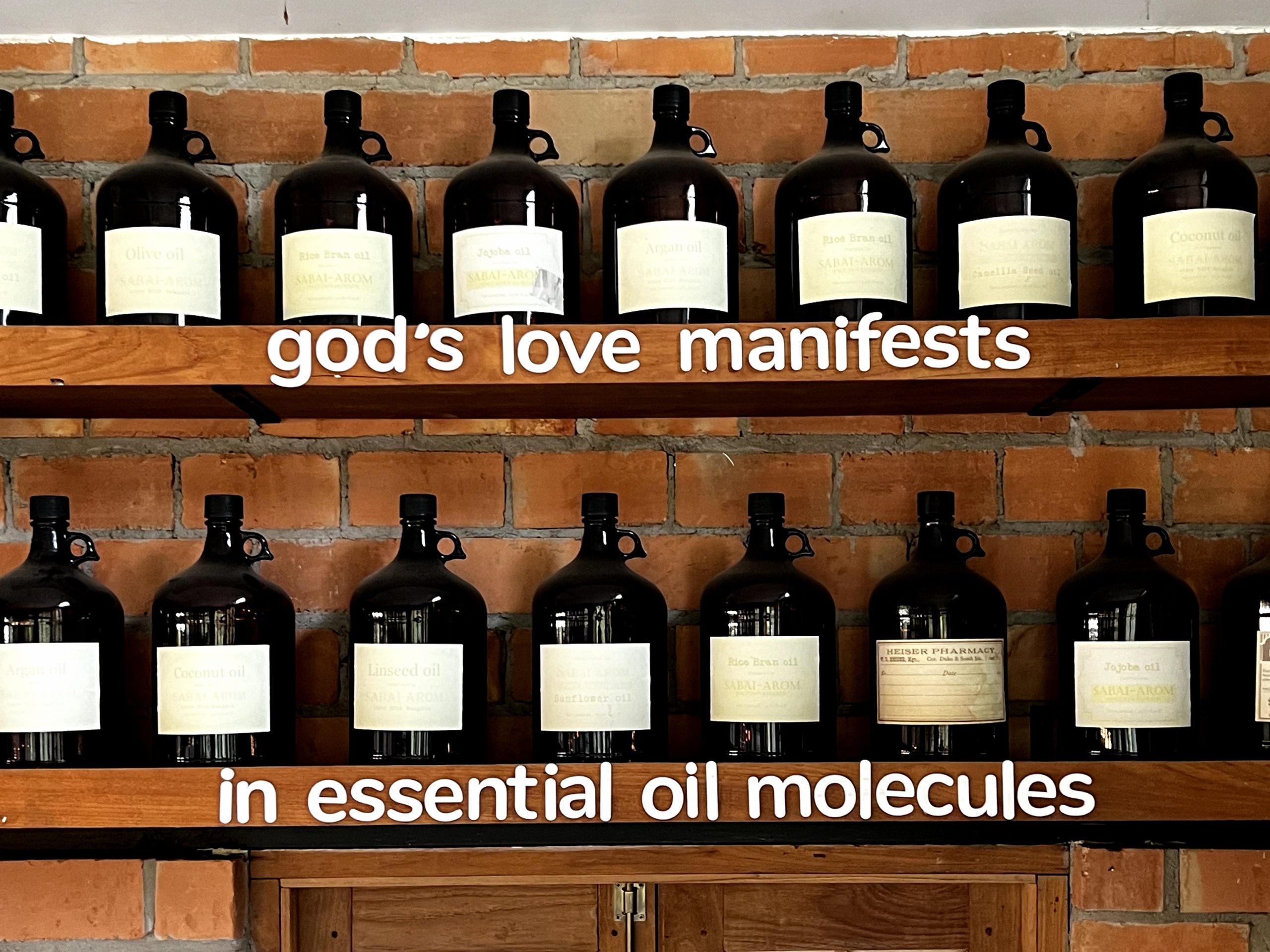
    “ God’s love manifests in essential oil’s molecules “

  • What Every Plant is Trying to Tell You: Understanding Oil Personalities

    What Every Plant is Trying to Tell You: Understanding Oil Personalities

    The concept of plant personality refers to the idea that plants have their own unique character or spirit, much like humans and animals. It is believe that by connecting with a plant’s personality or spirit, we can gain insight into its therapeutic properties and how it can best be used for healing.

    Similarly, it is believe that essential oils have their own personality characteristics that can influence their therapeutic effects. For example, some essential oils are believed to have a warming or cooling effect on the body, while others may be uplifting or calming to the emotions.

    The personality characteristics of essential oils , often described in terms of their scent and the effects they have on the body and mind, are derived from the unique composition of the four elements – earth, water, air, and fire.

    According to this perspective, each element represents a different aspect of the essential oil’s personality, and the specific combination of elements in the oil gives it its unique character.

    Earth element is associated with stability, grounding, and physicality.

    Essential oils with a strong earth element might be described as having a solid, grounding energy, and may be helpful for promoting feelings of stability and security.

    Water element is associated with emotion, intuition, and flow.

    Essential oils with a strong water element might be described as having a fluid, flowing energy, and may be helpful for promoting emotional healing and releasing stuck emotions.

    Air element is associated with intellect, communication, and creativity.

    Essential oils with a strong air element might be described as having a light, airy energy, and may be helpful for promoting mental clarity and creative inspiration.

    Fire element is associated with passion, vitality, and transformation.

    Essential oils with a strong fire element might be described as having a fiery, intense energy, and may be helpful for promoting feelings of passion and vitality.

    Lastly, It is also believe that the composition of the four elements in a person’s personality also determines their unique character and personality traits. In this way, the personality of an essential oil may be seen as a reflection of the personality of the person who uses it, and the two may work together in a complementary way to support overall health and wellbeing.

  • Do Plants Have Consciousness?

    Do Plants Have Consciousness?

    The concept of plant spirit or consciousness refers to the belief that plants, including those used for essential oils, have a kind of consciousness or spiritual essence that can be accessed through certain practices, such as shamanic journeying, meditation, or prayer.

    According to some indigenous and traditional healing systems, such as those found in South America and Africa, plants are believed to have their own spiritual intelligence and consciousness, and can offer guidance, wisdom, and healing to those who seek their help. These healing systems often use plant medicines, including essential oils, to help people connect with the plant spirit and receive their guidance and healing.

    In more modern practices, some people believe that essential oils can help connect us to the spirit or consciousness of the plant, and that this connection can offer therapeutic benefits, including emotional healing, spiritual growth, and personal transformation. Some people use essential oils in meditation or other spiritual practices to help them connect with the plant spirit and receive its guidance and healing.

    As of now, the concept of plant spirit or consciousness is still a matter of debate within the scientific community, and there is little empirical evidence to support these beliefs. However, many people find value in these practices and beliefs, and may use essential oils as a tool for spiritual growth and healing. As with any alternative or complementary therapy, it’s important to use essential oils safely and to seek the advice of a qualified healthcare professional before using them for spiritual purposes.

  • God’s Love Manifested In the Molecules of Essential Oils

    God’s Love Manifested In the Molecules of Essential Oils

    God’s Love Manifests In Essential Oils Molecules

    The statement “God’s love manifests in essential oil molecules” is a belief held by some people who practice aromatherapy and other forms of natural healing. The idea is that essential oils, which are derived from plants, are a gift from God or the universe and contain the energetic essence of the plant from which they are derived.

    According to this belief, plants are a manifestation of divine energy and contain spiritual properties that can promote healing and well-being. Essential oils are believed to be a concentrated form of this energy, containing the plant’s unique vibrational signature and the essence of God’s love and wisdom.

    When we use essential oils for healing and spiritual purposes, we are tapping into this divine energy and allowing it to work within us. By using essential oils with intention and reverence, we can open ourselves up to the healing power of God’s love and the wisdom of the natural world.

    It’s worth noting that this belief is not necessarily scientific, and not all practitioners of aromatherapy or natural healing hold this view. However, for those who do believe in the spiritual properties of essential oils, it can be a powerful and meaningful way to connect with the natural world and promote healing on a deep level.

  • The Fragrant World of Aromatic Plant Families

    The Fragrant World of Aromatic Plant Families

    In the lush tapestry of the plant kingdom, there exists a captivating realm known for its enchanting scents and distinct personalities—the world of aromatic plant families. These botanical clans encompass a remarkable diversity of species, each bearing its unique fragrance, appearance, and historical significance. As we journey through this aromatic landscape, we will explore several prominent plant families renowned for their aromatic members.

    From the soothing embrace of the mint family’s refreshing herbs to the zesty allure of the citrus family’s fruits, and from the warm embrace of the laurel family’s leaves to the vibrant culinary contributions of the carrot family’s herbs, each plant family reveals its own captivating story. We will uncover the origins, morphology, and favored environments of these aromatic families, shedding light on the natural and cultural heritage that continues to enrich our lives.

    Step into the fragrant world of aromatic plant families, where botanical diversity meets the artistry of scent, and where each family brings its unique charm to the table—both figuratively and literally. Join us on this aromatic journey as we delve into the botanical treasures that have captivated human senses and cultural practices throughout the ages.

    1. Lamiaceae (Mint Family):

    Origins: The Lamiaceae family, commonly known as the mint family, is believed to have originated in the Mediterranean region. It has since spread across the globe.

    Morphology: Lamiaceae plants are characterized by square stems, aromatic leaves with glandular trichomes, and often have tubular flowers. They exhibit a wide range of growth habits, from low-lying ground covers to tall shrubs.

    Environment: Many Lamiaceae species thrive in temperate and subtropical regions. They are often found in sunny, well-drained soils and are known for their drought tolerance. Examples include mint (Mentha spp.), basil (Ocimum basilicum), and rosemary (Rosmarinus officinalis).

    Common Characteristics:Aromatic Leaves: Lamiaceae plants are known for their aromatic leaves, often filled with essential oils that emit fragrant scents.

    Culinary and Medicinal Uses: Herbs like mint, basil, rosemary, and thyme belong to this family and are celebrated for their culinary and medicinal applications.

    Refreshing and Invigorating: The fragrances of mint family herbs are often refreshing, invigorating, and widely used in cooking, teas, and aromatherapy.

    2. Rutaceae (Rue or Citrus Family):

    Origins: The Rutaceae family, known as the citrus family, has its origins in tropical and subtropical regions, particularly in Southeast Asia.

    Morphology: Rutaceae plants are woody shrubs or small trees with aromatic leaves. They produce fragrant flowers, often with five petals, and bear fruits with distinctive oil glands containing essential oils.

    Environment: Citrus trees, a prominent member of this family, thrive in warm, subtropical climates with well-drained soils. They are cultivated in regions such as the Mediterranean, Florida, and California. Other Rutaceae members include rue (Ruta spp.) and kumquat (Fortunella spp.).

    Common Characteristics:Citrus Delights: The Rutaceae family encompasses citrus trees, including oranges, lemons, limes, and grapefruits, known for their zesty and uplifting fragrances.

    Essential Oils: Citrus peels are rich in essential oils, widely used in perfumes, cosmetics, and culinary creations.

    Vibrant and Energizing: The scents from citrus fruits are known for their vibrancy and ability to uplift the spirits.

    3. Asteraceae (Aster or Sunflower Family):

    Origins: The Asteraceae family is widespread and diverse, with origins in various parts of the world, including North America, South America, and Europe.

    Morphology: Asteraceae plants are known for their composite flower heads, which consist of many tiny florets arranged in a central disk surrounded by petals. Aromatic members include chamomile (Matricaria spp.) and feverfew (Tanacetum parthenium).

    Environment: These aromatic plants grow in diverse environments, from meadows to mountain slopes. Chamomile, for example, prefers well-drained soils and is often found in temperate regions.

    Common Characteristics:Soothing Scents: Asteraceae includes aromatic herbs like chamomile, renowned for their soothing and calming fragrances, often used in teas and essential oils.

    Medicinal Uses: Many members of this family have been used in traditional medicine due to their aromatic properties.

    Diverse Aromas: While chamomile exudes a gentle aroma, other Asteraceae plants may offer a range of scents, from earthy to floral.

    4. Lauraceae (Laurel Family):

    Origins: Lauraceae, the laurel family, has origins in tropical and subtropical regions, including parts of Asia, Africa, and the Americas.

    Morphology: Lauraceae members are typically evergreen trees or shrubs with aromatic leaves. They produce small, inconspicuous flowers and bear fruits with single seeds. Bay laurel (Laurus nobilis) and cinnamon (Cinnamomum spp.) are notable examples.

    Environment: Lauraceae plants thrive in warm, humid climates. Bay laurel is native to the Mediterranean region, while cinnamon trees are primarily grown in tropical areas with well-drained soils.

    Common Characteristics:Fragrant Leaves and Bark: Lauraceae includes aromatic trees and shrubs like bay laurel and cinnamon, known for their fragrant leaves and bark.

    Culinary Significance: Bay leaves are used as a culinary herb, imparting a unique aroma to dishes.

    Sweet and Spicy: Cinnamon bark is celebrated for its sweet and spicy fragrance, making it a prized spice in both cooking and perfumery.

    5. Apiaceae (Carrot or Parsley Family):

    Origins: The Apiaceae family has a diverse global distribution, with origins in various regions, including Europe, Asia, and North America.

    Morphology: Aromatic members of the Apiaceae family are characterized by compound umbels, which consist of small flowers arranged in umbrella-like clusters. Plants like parsley (Petroselinum crispum), dill (Anethum graveolens), and cilantro (Coriandrum sativum) belong to this family.

    Environment: These herbs thrive in temperate climates with well-drained soils. They often grow as annuals and prefer full sun to partial shade.

    Common Characteristics:Culinary Delights: Aromatic plants like dill, parsley, and cilantro belong to Apiaceae, appreciated for their culinary seasonings and garnishes.

    Distinct Aromas: Each herb in this family carries a unique aroma, enhancing the flavors of various dishes.

    Versatile Scents: From the freshness of parsley to the pungency of cilantro, Apiaceae herbs cater to diverse culinary preferences.

    6. Myrtaceae (Myrtle Family):

    Origins: The Myrtaceae family is predominantly found in tropical and subtropical regions, with origins in areas such as Australia, Southeast Asia, and South America.

    Morphology: Myrtaceae plants are characterized by aromatic leaves and typically have showy, five-petaled flowers. Notable members include eucalyptus (Eucalyptus spp.), tea tree (Melaleuca spp.), and cloves (Syzygium aromaticum).

    Environment: Eucalyptus trees are iconic in Australia and thrive in diverse environments, from temperate to arid regions. Clove trees prefer tropical climates with well-drained soils. Tea tree species are often found in wetlands and swampy areas.

    Common Characteristics:Aromatic Leaves and Fruits: Myrtaceae includes aromatic plants like eucalyptus, tea tree, and cloves, known for their aromatic leaves and fruits.

    Medicinal and Culinary Uses: Eucalyptus leaves provide essential oils with menthol-like scents used in medicinal products, while cloves offer a warm, spicy aroma for culinary creations.

    These details highlight the origins, morphology, and typical environments of some of the most well-known aromatic plant families. Understanding these characteristics can deepen our appreciation for the diverse world of aromatic herbs, spices, and botanical wonders that have enriched human culture and cuisine for centuries.

  • The Rose: A Tale of Beauty and Symbolism Through the Ages

    The Rose: A Tale of Beauty and Symbolism Through the Ages

    The Rose: A Tale of Beauty and Symbolism Through the Ages

    Tracing the Fascinating History of the Rose, from Ancient Beginnings to Modern Significance

    The rose, often referred to as the “Queen of Flowers,” is a botanical marvel that has enchanted humanity for millennia. Its journey through history is a tale of beauty, symbolism, and enduring fascination, with roots that stretch back to ancient civilizations.

    Ancient Beginnings: The Wild Rose

    The history of the rose begins in the wild, where it originated in regions across Asia, Europe, and North America. Fossil evidence suggests that wild roses have existed for over 35 million years, long before human cultivation.

    Early Cultivation: Rose Gardens of Persia

    The rose’s association with human culture can be traced back to ancient Persia (modern-day Iran), where the cultivation of roses began over 2,500 years ago. Persian gardens, renowned for their beauty and design, often featured roses as a central element. The Persians created rosewater and rose oil, which were used for culinary, medicinal, and cosmetic purposes.

    Ancient Greece and Rome: The Symbol of Love and Beauty

    The Greeks and Romans embraced the rose with fervor. In Greek mythology, the rose was linked to the goddess Aphrodite (Venus in Roman mythology), the goddess of love and beauty. Legend has it that the rose was born from Aphrodite’s tears as they fell to the earth and mixed with her lover Adonis’s blood.

    Roses adorned the halls of feasts, were used in perfumes, and became symbols of love and desire. The Roman poet Virgil mentioned roses in his writings, immortalizing them as symbols of luxury and refinement.

    Medieval Europe: Roses and Royalty

    Roses continued to thrive as symbols of beauty and opulence during the medieval period. The Wars of the Roses in 15th-century England, for example, were named for the red and white roses used as emblems by the warring houses of Lancaster and York.

    The Renaissance: Artistic Flourishing

    During the Renaissance, roses flourished in both art and culture. Painters such as Botticelli and Raphael featured roses in their works, and the rose became a symbol of the Virgin Mary, representing purity and devotion.

    Modern Times: A Global Icon

    In the modern era, the rose has transcended cultures and borders to become a global symbol of love, passion, and elegance. Its fragrance and beauty continue to inspire poets, artists, and gardeners worldwide.

    Rose Varieties and Cultivation

    Today, there are thousands of rose varieties cultivated for their unique colors, fragrances, and forms. Hybrid tea roses, floribundas, and old garden roses are just a few examples. The cultivation and appreciation of roses have evolved into a dedicated horticultural pursuit, with rose gardens and exhibitions celebrated globally.

    Symbolism and Significance

    The rose remains a symbol of love and passion, making it a popular choice for romantic gestures and special occasions. Different colors convey distinct meanings; for instance, red symbolizes love, while white represents purity. Roses are also used as symbols of remembrance and honor.

    The Enduring Appeal of the Rose

    The rose’s history is a testament to its timeless beauty and enduring symbolism. It continues to be cherished for its aesthetic and aromatic qualities, and it holds a special place in cultures around the world. Whether adorning gardens, weddings, or gifts, the rose’s enchanting story is woven into the fabric of human history, a testament to the enduring allure of nature’s most iconic flower.

  • Scented Souls Vol.1

    Scented Souls Vol.1

    Buy on Amazon

    Scented Souls:

    SPIRITUS AROMATICA

    Volume I : The Healing Shadows

    A Sacred Guide to Essential Oils for Emotional Healing, Shadow Integration, and Soul Grounding

    Before aromatherapy became a wellness trend, scent was known as sacred medicine—a silent language of the Divine.

    Across temples of Egypt, shrines of India, and mystery schools of ancient Greece, priestesses and mystics turned to fragrant plants not just for physical healing, but for emotional transformation, energetic protection, and soul remembrance.

    Scented Souls: SPIRITUS AROMATICA – Volume I: The Healing Shadows is a 300+ page, full-color guide to over 40 essential oils—each presented not as a product, but as a sentient spirit with its own archetypal essence, soul medicine, and emotional alchemy.

    This is not a recipe book.

    This is a spiritual companion—a healing codex that invites you into deep inner work through the ancient path of scent alchemy.
    In this sacred guide, you’ll learn how to:Work with plant spirit guides and emotional archetypes to support self-healing, trauma release, and chakra balance

    Create personalized rituals for grounding, energy clearing, soul protection, and divine connection

    Integrate shadow work with compassion, presence, and sacred truth

    Awaken your feminine essence through sensual, earth-rooted embodiment

    Reconnect with Mother Earth’s healing intelligence through scent, stillness, and soul listening

    Whether you’re navigating grief, burnout, self-doubt, or simply longing to come home to yourself—this book will meet you in the sacred dark, and gently guide you back to the light.

    A Sacred Transmission

    Scented Souls is a temple offering—infused with divine frequencies and spiritual transmissions received through devotion and stillness.

    It carries the presence of plant allies, archetypal wisdom, and sacred guidance from the Council of Light: Metatron, Thoth, and Isis—who hold the field of remembrance through which this work was birthed.

    WHO THIS BOOK IS FOR

    Intuitives, empaths, and energy healers

    Seekers of sacred feminine wisdom

    Lovers of essential oils ready to go deeper

    Anyone on a soul journey of healing, remembrance, and inner restoration

    Scented Souls is not a quick fix. It is a portal.

    A return to the ancient knowing that scent is not just fragrant—

    It is alive.

    ORDER YOUR COPY

    Scented Souls: Spiritus Aromatica is available now on Amazon.

    Choose the format that resonates with your practice.

    *** Introductory Gateway Pricing ***

    The Kindle version of this book is offered at an introductory price of $9.99 to make its sacred teachings accessible to all who feel the call.

    In time, the eBook will return to its soul-aligned value of $22.22, reflecting the depth and light-coded transmission it carries.

    Thank you for honoring this gateway with your presence.

    Buy On Amazon

    Each drop is a memory. Each scent is a mirror.

    This is not about using oils—it is about letting them use you for your healing.

  • The Seven Alchemical Processes of The Soul

    The Seven Alchemical Processes of The Soul

    The Seven Stages of Alchemical Transformation are a spiritual metaphor that represent the journey of transformation from the base state of consciousness to a higher state of being. Each stage represents a different aspect of this transformation, and each stage builds upon the previous one. Here’s a brief overview of each stage:

    1.Calcination

    This stage represents the breaking down of the old self and the burning away of impurities. It’s a process of purification and transformation through intense heat and pressure. The stage represents a period of intense challenge, where our existing beliefs and habits are tested and often broken down. It’s like going through a difficult time in our lives that forces us to confront our weaknesses and grow stronger as a result.

    2. Dissolution

    In this stage, the purified self is dissolved into its constituent parts, representing the breaking down of the ego and the dissolution of old patterns and beliefs. During this stage, we begin to let go of the parts of ourselves that no longer serve us. This can involve shedding old patterns of behavior, releasing past traumas, or letting go of relationships that are no longer healthy for us.

    3.Separation

    The third stage represents the separation of the purified self from the old self, as well as the separation of the individual from the collective consciousness. During this stage, we start to develop a clearer sense of our own identity and separate ourselves from the expectations and opinions of others. We learn to trust our own instincts and make decisions that align with our values, even if they go against the expectations of those around us.

    4.Conjunction

    In this stage, the purified self is reunited with the collective consciousness, representing the integration of the individual into the larger whole. This stage involves integrating our newfound sense of self with the world around us. We begin to see ourselves as part of a larger whole and recognize our interconnectedness with others. This can involve developing deeper relationships with loved ones or finding ways to contribute to our communities.

    5.Fermentation

    This stage represents the transformation of the purified self into something new and different, through the process of fermentation. In this stage, we start to experiment with new ways of being and thinking. We allow ourselves to be curious and open to new experiences, even if they take us out of our comfort zone. This can lead to breakthroughs in our personal growth and the discovery of hidden talents and passions.

    6.Distillation

    In this stage, the new self is purified even further, through the process of distillation. This represents the refinement of the self and the elevation to a higher state of consciousness. During this stage, we start to refine our understanding of who we are and what we want out of life. We focus on the things that truly matter to us and let go of distractions and superficial desires. This can involve developing a clearer sense of purpose or refining our goals and aspirations.

    7.Coagulation

    The final stage represents the solidification of the new self, as well as the integration of the new self into the physical world. It’s a process of grounding and manifestation, as the new self becomes fully realized and integrated into daily life. This stage is about grounding our newfound sense of self in the physical world. We take practical steps to bring our vision into reality and make a tangible impact on the world around us. This can involve pursuing a career that aligns with our values, starting a business, or engaging in activism or social justice work.

    These stages are not necessarily linear, and individuals may go through them in different orders or experience some stages more intensely than others. However, they provide a useful framework for understanding the process of spiritual transformation and the journey towards a higher state of consciousness.

  • How understanding our soul archetype can lead to true freedom?

    How understanding our soul archetype can lead to true freedom?

    Understanding archetypes can lead to true freedom by helping us to better understand ourselves and the world around us. Archetypes are universal symbols and patterns of behavior that are present in all cultures and societies. They represent fundamental human experiences and can help us to better understand our own thoughts, feelings, and behaviors.

    By understanding archetypes, we can gain a deeper understanding of our own motivations, fears, desires, and beliefs. This can help us to recognize patterns in our lives and make more conscious choices about how we want to live. For example, by recognizing the archetype of the “hero,” we may be inspired to take on challenges and pursue our goals with greater determination and courage.

    Additionally, understanding archetypes can help us to better understand the motivations and behaviors of others. By recognizing the archetypes that are present in the people around us, we can gain greater empathy and understanding, which can improve our relationships and help us to navigate social situations more effectively.

    Ultimately, understanding archetypes can lead to greater self-awareness, which is a key component of true freedom. By becoming more aware of our own thoughts, feelings, and behaviors, we can begin to live more consciously and make choices that are in alignment with our true selves. This can lead to a greater sense of fulfillment and purpose in our lives.

  • How Do Our Shadows Obstruct Our Freedom?

    How Do Our Shadows Obstruct Our Freedom?

    The shadow is a part of ourselves that we keep hidden, often because it contains qualities or traits that we deem to be negative or unacceptable. These can include things like anger, jealousy, greed, or selfishness. By denying these aspects of ourselves and keeping them hidden in the shadow, we can become disconnected from our authentic selves and experience a sense of inner conflict or tension.

    This inner conflict can manifest in various ways, such as feeling stuck in unfulfilling jobs or relationships, struggling with addiction or mental health issues, or feeling like we are not living up to our full potential. In other words, when we deny or repress parts of ourselves, we create blockages that can prevent us from experiencing true freedom and fulfillment.

    In order to overcome these blockages and reclaim our sense of freedom, it is important to acknowledge and integrate the shadow. This involves recognizing and accepting the parts of ourselves that we have kept hidden, and working to integrate them into our conscious awareness. By doing so, we can begin to live more authentically and with greater self-awareness, which can lead to a greater sense of freedom and fulfillment in our lives.

  • When Your Soul Archetype Feels Out of Alignment: Signs and Solutions

    When Your Soul Archetype Feels Out of Alignment: Signs and Solutions

    It is often the case that we mistakenly perceive our soul role ( or soul archetype) due to various external factors that shape our life experiences. Family upbringing, social conditioning, and past life experiences can all contribute to our perception of who we are and what our role in life is.

    For example, if someone grew up in a family that placed a high value on academic achievement, they may feel pressured to pursue a career in a field that they are not passionate about, but one that is seen as prestigious or financially lucrative. This can lead to a misalignment with their true essence, causing them to feel unfulfilled and disconnected from their purpose in life.

    Similarly, societal expectations and conditioning can lead us to believe that we need to conform to certain roles or identities, even if they do not align with our true essence. For instance, some people may feel pressure to conform to traditional gender roles, even if they do not identify with them.

    Furthermore, past life experiences can also impact our perception of our soul role. For example, if someone had a traumatic experience in a past life related to a particular role or identity, they may have an aversion to it in their current life, even if it is their true soul role.

    All of these factors can lead to a misalignment with our true essence, causing disharmony in our lives. It is important to reflect on our experiences and beliefs, and to engage in practices such as meditation and self-reflection to connect with our true essence and align with our soul role.

  • How Does Our Ego & Persona Obstruct Our Freedom?

    How Does Our Ego & Persona Obstruct Our Freedom?

    Our ego and persona are both shaped by various influences, including social conditioning and our own personal beliefs and values. When we are exposed to certain beliefs and values repeatedly, especially from a young age, we tend to internalize them and they become a part of our identity. This can lead to limitations and blockages that prevent us from experiencing true freedom.

    For example, if we are conditioned to believe that success and happiness come from external factors like wealth or social status, we may become overly focused on achieving those things rather than on our own true desires and values. This can lead to an ego that is driven by external validation rather than internal fulfillment, which can be limiting and unsatisfying.

    Similarly, our persona can also be shaped by social conditioning in ways that limit our ability to express ourselves authentically. For instance, if we are taught that certain emotions like anger or sadness are not acceptable to express in public, we may develop a persona that suppresses those emotions. This can lead to a persona that is not fully authentic or expressive, which can prevent us from forming genuine connections with others.

    To overcome these limitations and blockages, it is important to become aware of them and to work to develop a more authentic sense of self. This involves exploring our own beliefs and values, as well as questioning and challenging the societal norms and expectations that have been imposed on us. By doing so, we can begin to live more in alignment with our true selves, and experience greater freedom and fulfillment in our lives.

  • Understanding Your Soul Archetype: Exploring Your Purpose and Meaning

    Understanding Your Soul Archetype: Exploring Your Purpose and Meaning

    The concept of Soul Archetype is part of the Michael teachings, which is a spiritual philosophy that provides a comprehensive understanding of the nature of reality, the purpose of life, and the journey of the soul.

    The Soul Archetype, also known as the Soul Role, is a reflection of the deeper qualities and characteristics that make us who we are. It is a reflection of our strengths, weaknesses, and the lessons we are here to learn. In essence, it is the reason we are here on this earth and the ultimate goal of our existence.

    According to the Michael teachings, there are seven distinct Soul Roles, namely Server, Artisan, Warrior, Scholar, Sage, Priest, and King. Each Soul Role has a specific set of traits, strengths, challenges, and life goals that shape the individual’s personality, behavior, and destiny. The Soul Role is determined by the soul’s vibration and is consistent throughout all of its incarnations.

    Understanding one’s Soul Role or Soul Archetype can help individuals gain insights into their life purpose, passion, relationships, and fulfillment in their lives. Living out their true calling helps them to be able to make a meaningful contribution to the world around them. It is not always easy, and there may be obstacles and challenges along the way. However, the journey is often rewarding, and it can lead to a deeper sense of self-awareness and spiritual growth.

    In conclusion, the concept of soul roles is a powerful reminder that each of us has a unique purpose and mission in life. It is up to us to discover our soul role and live it out to the best of our ability. By doing so, we can find meaning, fulfillment, and a deeper sense of connection to the world around us.

  • What Is The Alchemy Of The Soul?

    What Is The Alchemy Of The Soul?

    The alchemy of the soul is a metaphorical concept that refers to the process of spiritual transformation and inner growth. It draws its inspiration from the ancient practice of alchemy, which sought to transmute base metals into gold. In the same way, the alchemy of the soul seeks to transform the inner self, turning negative qualities into positive ones, and unlocking the full potential of the individual.

    The alchemy of the soul involves a process of self-discovery and inner work, where individuals delve into their subconscious to confront and transform their negative patterns, emotions, and beliefs. This process can be painful and challenging, but ultimately leads to greater self-awareness, inner peace, and spiritual growth.

    The alchemy of the soul is a deeply personal and individual journey, as each person has their own unique challenges and obstacles to overcome. However, the use of transformative tools like meditation, journaling, and essential oils can support and enhance this process, helping individuals to access deeper levels of consciousness and to release emotional blockages that may be holding them back.

    Ultimately, the alchemy of the soul is a lifelong journey, as we continue to evolve and grow throughout our lives. It requires courage, self-reflection, and a willingness to confront our innermost selves, but the rewards are immense, as we connect with our true essence and live a more fulfilling and authentic life.

  • What Is The Role Of The Pineal And Pituitary Glands?

    What Is The Role Of The Pineal And Pituitary Glands?

    The pineal gland, often referred to as the “third eye,” is located deep within the brain.

    It is responsible for producing melatonin, a hormone that regulates sleep-wake cycles. In spiritual traditions, the pineal gland is associated with intuition, inner vision, and spiritual awareness. It is believed to be a gateway to higher states of consciousness and spiritual experiences. Some refer to it as the seat of the soul or the connection point between the physical and spiritual realms.

    The pituitary gland, also known as the “master gland,” is located at the base of the brain. It produces and releases various hormones that regulate important bodily functions, including growth, metabolism, and reproduction.

    In spiritual contexts, the pituitary gland is considered to be associated with higher knowledge, wisdom, and spiritual insight. It is seen as a center of spiritual awakening and transformation.

    Both the pineal and pituitary glands are believed to be highly sensitive to energy and vibration. They are considered to be key centers in the body that facilitate the reception and integration of spiritual experiences and higher levels of consciousness. Activation and harmonization of these glands are often sought after in spiritual practices to enhance intuition, expand awareness, and deepen the spiritual connection.

    It is important to note that while there is much interest and speculation about the role of the pineal and pituitary glands in spirituality, scientific research is still ongoing to fully understand their functions and their connections to spiritual experiences.

  • Why How We Use Plants Matters: The Ethics of Working with Essential Oils

    Why How We Use Plants Matters: The Ethics of Working with Essential Oils

    The Ethics of Essence: What it Means to be a Plant’s Ambassador

    In the modern world, we are taught to view nature as a “resource”—something to be harvested, processed, and consumed for our own benefit. We look at an essential oil and see a tool for our health or a scent for our home. But in the Earth School, we learn a different perspective.

    To work with Scent Alchemy is to step into the role of a Plant’s Ambassador. It is a move away from the “Warrior” mindset of conquering nature and toward the “Gardener” mindset of collaborating with it. When we open a bottle of essence, we aren’t just using a product; we are inviting a living intelligence to partner with our own.

    The Intelligence of the Aroma

    A plant does not produce aromatic molecules for our benefit. It produces them for its own survival, communication, and healing.

    Resins are the “scabs” of a tree, created to seal wounds and prevent infection.

    Florals are the plant’s “social frequency,” designed to attract connection and ensure the future.

    Roots are the plant’s “data storage,” anchoring it to the earth and gathering minerals.

    As a Scent Alchemist, I recognize that when we use these oils, we are borrowing the plant’s lived wisdom. If we take that wisdom without respect or recognition, the frequency remains “flat.” But when we approach the plant as an ambassador, we unlock the full depth of its botanical code.

    The Three Pillars of Ambassadorship

    Being an ambassador for the plants means holding a high standard for how these essences are sourced and shared. This is why I focus on three core ethics:

    1. Recognition over Extraction

    We acknowledge that every drop of oil is the “soul” of a plant that lived, breathed, and survived in a specific landscape. We do not treat it as a commodity, but as a guest in our Internal Landscape.

    2. Guarding the Origin

    A plant’s message is only as clear as the soil it grew in. As an ambassador, I am committed to finding “True Nodes”—suppliers and distillers who respect the land and the local communities. If a plant is harvested in a way that creates “trauma” in the garden, that frequency is carried into the oil. We seek the frequency of Harmony.

    3. Translation, Not Decoration

    My role is not to “flavor” your life, but to translate the plant’s message for your nervous system. An ambassador speaks two languages. I speak the language of the plants, and I speak the language of the human soul. My work is to help you hear what the Spiritus Aromatica is saying to you.

    Moving from “Consumer” to “Gardener”

    When you use an oil from this perspective, your entire experience changes. You no longer just “put on a scent.” You enter into a relationship. You begin to tend to your own “Internal Garden” with the same reverence that a gardener tends to the earth.

    Are you ready to meet the plants as partners?

    In our Inner Mapping Sessions, we practice the “Ethics of Essence.” We learn to approach the botanicals not as things to be used, but as mentors to be heard. Together, we find the specific plant allies that are ready to advocate for your growth and stability.

    [Become a Partner with the Garden: Book a Session →]

    You Are Part of a Living Network

    You are not an isolated island; you are like a tree in a vast, interconnected forest. I call this collective space the Digital Garden. Just as one healthy tree helps stabilize the soil for the entire forest, your choice to treat nature with respect and recognition helps stabilize the world around you. When you move from “extraction” to “collaboration,” the frequency of your presence honors the entire network. You aren’t just tending to your own soul; you are tending to our shared garden.