Tag: botanical-alchemy

  • The Ancient Roots of Scent Alchemy

    The Ancient Roots of Scent Alchemy: A Journey through Time

    Exploring the Timeless Connection between Scent, Alchemy, and Personal Transformation

    As we embark on a journey into the world of Scent Alchemy, it’s essential to understand that the practice of using scent for transformation is not a recent discovery. Instead, it’s deeply rooted in the annals of history, dating back to ancient civilizations where scent and alchemy intertwined to unlock the secrets of personal and spiritual growth.

    The Scented Trails of Ancient Egypt

    Our voyage into the world of Scent Alchemy begins in ancient Egypt, a civilization renowned for its fascination with fragrances. In the land of the pharaohs, aromatic plants and resins were cherished not only for their pleasant scents but also for their profound spiritual significance.

    Ancient Egyptians believed that fragrances held the power to connect the physical world with the divine. They used scents in religious rituals, believing that the aromatic smoke from incense and the application of fragrant oils could bridge the gap between mortals and gods. This practice, in essence, was an early form of scent alchemy—a quest to transform and elevate the human spirit.

    Scent Alchemy in Ancient India: Ayurveda and Beyond

    In the ancient traditions of India, particularly within Ayurveda, the use of scent as a healing and transformative tool was prevalent. The ancient Ayurvedic texts contain references to aromatic herbs and oils used for both physical and mental well-being.

    Ayurveda recognized the intricate connection between the senses and the mind. Scents were considered a way to influence one’s thoughts, emotions, and overall state of consciousness positively. Whether through the use of perfumed oils in massages or the burning of fragrant herbs in meditation, scent alchemy played a pivotal role in personal transformation.

    Alchemy’s Aromatic Mysteries in the West

    In the Western world, alchemy was a multifaceted practice that aimed to transform base materials into precious substances, such as the famous pursuit of turning lead into gold. Yet, alongside these material pursuits, a more esoteric form of alchemy emerged—one that sought to transmute the soul and achieve spiritual enlightenment.

    Within this mystical branch of alchemy, aromatic substances were highly regarded. Alchemists believed that just as they could transmute physical substances, they could also refine and elevate the human spirit through the use of specific scents. The “Elixir of Life” and the “Philosopher’s Stone” became metaphors for spiritual transformation, often linked to fragrances and elixirs.

    Modern Resurgence of Scent Alchemy

    While the ancient practices of scent alchemy varied across cultures and time periods, they all shared a common thread: the belief in the transformative power of scent to penetrate the depths of the human psyche and soul.

    Today, the concept of Scent Alchemy continues to evolve, drawing inspiration from these ancient roots. In the modern world, we combine the wisdom of the past with contemporary science to explore the potential of fragrances for personal growth and self-transformation.

    In the articles to come, we will journey deeper into the modern practice of Scent Alchemy, exploring how ancient wisdom meets contemporary knowledge to unlock the secrets of personal and spiritual development through the power of scent.

    Join us as we trace the scented trails of our ancestors and embark on a voyage of self-discovery and transformation through the aromatic wonders of Scent Alchemy.

  • Why We Call It Scent Alchemy: And Why It Changes Everything

    Why We Call It Scent Alchemy: And Why It Changes Everything

    Scent Alchemy: Transforming Mind, Body, and Spirit

    Scent Alchemy is a powerful practice based on the principles of aromatherapy. It involves the use of essential oils to promote overall well-being, but takes it one step further by incorporating the spiritual and metaphysical properties of these oils to create positive changes in the mind, body, and spirit.

    The Power of Alchemy

    The term “alchemy” is used because it suggests the transformation of one substance into another, which is similar to the way that essential oils can transform our mood and emotions. The idea is that the combination of different scents can create a new and more potent substance that has a powerful effect on our consciousness.

    The Four Alchemical Processes of Scent Alchemy

    Alchemy is an ancient philosophical and metaphysical tradition that aims to transform and perfect matter, both physically and spiritually. In the context of scent alchemy, the entire process starts from nature and takes multiple alchemical processes. Each process builds upon the previous one and requires different skills, knowledge, and tools to achieve the desired result.

    Scent Alchemy involves four alchemical processes.

    Process#1 The Creation of Aromatic Compounds

    The first process involves the creation of aromatic compounds by plants. These compounds reflect the unique vibrational energetic profile of each plant.

    Process #2 The Distillation of Essential Oils

    The second process involves the distillation of these compounds to produce essential oils, which contain the “soul essence of the plant” with their unique archetypal qualities that can be used for various purposes, including physical, mental, emotional, and spiritual healing.

    Process #3 Transforming Vibrational Life Forces

    The third process involves using a series of selective essential oils with different profiles of vibrational energy for the transformation process for each individual. By simply breathing in their aromas, the vibrational energy of each element can help purify, heal, anchor, and raise an individual’s energy field.

    Process #4 Mental Transformation

    In the final step of the scent alchemy, the transformed vibrational life forces are combined with intention and visualization to manifest a desired outcome. This can be done through various techniques such as sound therapy, meditation, or visualization practices. By combining the power of intention with the vibrational energy of the essential oils, individuals can create a positive shift in their energetic field and ultimately manifest their desires into reality.

    Join Our Scent Alchemy Program

    Scent Alchemy is a transformative practice that can help individuals achieve greater well-being and manifest their desires. If you’re interested in exploring the power of scent alchemy, we invite you to join our Scent Alchemy Program. Our program is designed to help you identify the scents that resonate with you and facilitate the practice of scent alchemy in the comfort of your own home.

  • How Essential Oils Stimulate Pineal And Pituitary Glands?

    How Essential Oils Stimulate Pineal And Pituitary Glands?

    Essential oils can stimulate the pineal and pituitary glands in several ways :

    { Inhalation }

    When we inhale essential oils, their aroma molecules enter the nasal passages and stimulate the olfactory nerves. These nerves are connected to the limbic system in the brain, which includes the pineal and pituitary glands. The limbic system is responsible for regulating emotions, memories, and the autonomic nervous system. By inhaling essential oils, we can stimulate the limbic system and promote relaxation, stress reduction, and other beneficial effects.

    { Transdermal Absorption }

    Essential oils can also be absorbed through the skin and into the bloodstream, where they can travel to the pineal and pituitary glands. When essential oils are applied topically, their molecules can penetrate the skin and enter the bloodstream, where they can influence the body and mind.

    { Vibrational Energy }

    Essential oils are believed to have a unique vibrational energy that can resonate with the body’s energy field. This energy can stimulate the pineal and pituitary glands and promote balance and harmony in the body and mind.

    By stimulating the pineal and pituitary glands in these ways, essential oils can promote relaxation, emotional balance, and spiritual growth. They can also help to regulate the body’s circadian rhythms, promote healthy sleep patterns, and support overall health and well-being.

  • How To Measure The Vibrational Energy Of Essential Oils ?

    How To Measure The Vibrational Energy Of Essential Oils ?

    We can measure the vibrational energy of essential oils using a technique called vibrational spectroscopy. This technique involves measuring the absorption or scattering of light by molecules in a sample as a function of frequency. The resulting spectrum provides information about the vibrational energy levels of the molecules in the sample.

    In particular, infrared spectroscopy is a widely used technique for analyzing the vibrational properties of molecules in essential oils. In this method, the sample is irradiated with infrared radiation, which excites the vibrational modes of the molecules. The resulting absorption spectrum can be used to identify the functional groups present in the sample, as well as to quantify the relative amounts of different components.

    Other vibrational spectroscopy techniques that can be used to analyze essential oils include Raman spectroscopy, terahertz spectroscopy, and far-infrared spectroscopy. Each of these methods has its own strengths and limitations, and the choice of technique depends on the specific properties of the sample and the information that is needed. Overall, vibrational spectroscopy provides a powerful tool for analyzing the vibrational energy of essential oils and other complex mixtures of organic molecules.

    Here are some examples of essential oils and their approximate frequency levels in hertz (Hz):

    Peppermint – 78-92 Hz

    Lavender – 118-122 Hz

    Frankincense – 147-155 Hz

    Lemon – 72-75 Hz

    Eucalyptus – 52-62 Hz

    Tea Tree – 48-60 Hz

    Rose – 320 Hz

    Orange – 38-48 Hz

    Ylang Ylang – 122-140 Hz

    Bergamot – 107 Hz

    Cedarwood – 52 Hz

    Chamomile – 105 Hz

    Cinnamon – 55 Hz

    Clove – 178 Hz

    Geranium – 52 Hz

    Ginger – 52 Hz

    Juniper – 98 Hz

    Myrrh – 105 Hz

    Patchouli – 58 Hz

    Sandalwood – 96 Hz

    Rosemary – 82-92 Hz

    Jasmine – 108-120 Hz

    Clary Sage – 140 Hz

    Thyme – 67-75 Hz

  • How Essential Oils Assist In The Alchemical Processes of Transformation

    How Essential Oils Assist In The Alchemical Processes of Transformation

    Essential oils can be a powerful tool for supporting us through the different stages of the alchemical process of self-transformation. Here are some ways you can use essential oils to support you in each stage:

    1.Calcination

    During this stage, essential oils that have a grounding and calming effect can be helpful. These oils can help to calm the mind, ease anxiety, and promote a sense of stability during times of challenge.

    2.Dissolution

    Essential oils that have a purifying and cleansing effect can be beneficial during this stage. These oils can help to clear negative energy and promote mental clarity, making it easier to let go of old patterns and beliefs.

    3.Separation

    During this stage, essential oils that help to promote self-confidence and assertiveness can be helpful. These oils can help to boost self-esteem and encourage us to stand up for ourselves and our values.

    4.Conjunction

    Essential oils that have a harmonizing and balancing effect can be beneficial during this stage. These oils can help to promote feelings of peace and unity, making it easier to connect with others and build deeper relationships.

    5.Fermentation

    During this stage, essential oils that have a creative and stimulating effect can be helpful. These oils can help to stimulate the mind and promote a sense of curiosity and playfulness, making it easier to explore new ideas and ways of being.

    6.Distillation

    Essential oils that have a grounding and centering effect can be beneficial during this stage. These oils can help to promote inner peace and clarity, making it easier to focus on our goals and aspirations.

    7.Coagulation

    During this stage, essential oils that have a manifesting and empowering effect can be helpful. These oils can help to promote a sense of confidence and empowerment, making it easier to take practical steps towards achieving our dreams and goals.

    Overall, using essential oils can be a helpful way to support ourselves during the alchemical process of self-transformation. By choosing oils that are aligned with the different stages of the process, we can create a supportive and nurturing environment for our personal growth and development.

  • Why Can Essential Oils Transform Us?

    Why Can Essential Oils Transform Us?

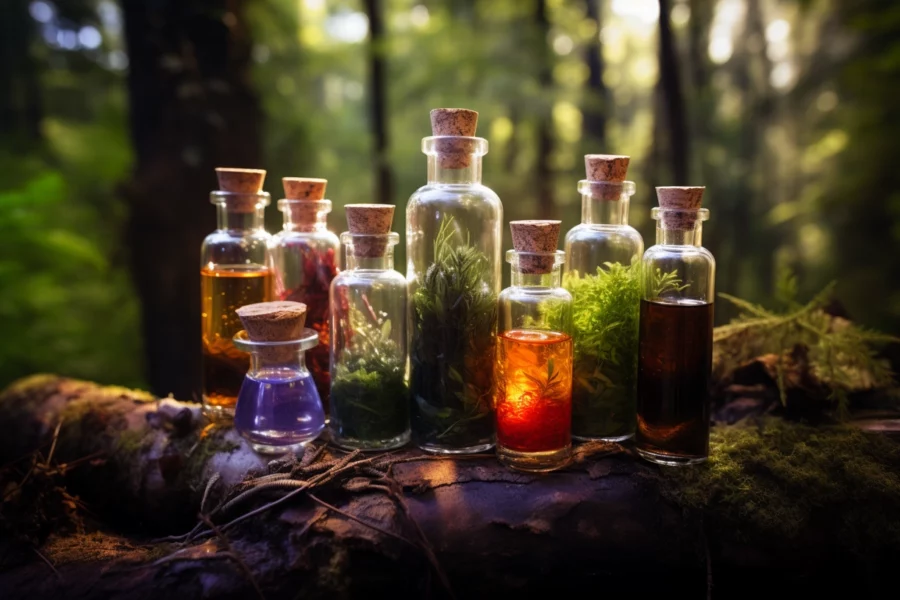
    Essential oils can be seen as the spirit of the plant, each oil carrying the unique personality and characteristics of its source. Just as each person has their own individual personality and traits, each essential oil has its own distinct energy and healing properties. This is why choosing the suitable essential oils tailored for specific needs and conditions is important, as different oils can have different effects on the mind, body, and spirit.

    The distillation process of essential oils can be compared to the alchemy of the soul process, which is the process of spiritual transformation of us , where the plant’s physical form is transformed into a potent essence that can be used for healing and transformation. This process involves heating and cooling the plant material to extract its essential oil, separating it from the water and other plant components. This process is not only a physical transformation, but also a spiritual one, as the plant’s spirit is captured in the oil.

    By using essential oils in combination with other transformative practices like meditation, sound healing, and visual imagination, we can create a powerful synergy that supports us on our journey of self-discovery and transformation. This can help us to deepen our connection to ourselves, release emotional blockages, and access deeper levels of consciousness.

    At Odorami, we believe that everyone has the power to transform their lives and connect with their true essence. We invite you to explore our range of essential oils and transformative practices, and to join us on this journey of self-discovery and transformation.

    “ God’s love manifests in essential oil’s molecules “

  • What Every Plant is Trying to Tell You: Understanding Oil Personalities

    What Every Plant is Trying to Tell You: Understanding Oil Personalities

    The concept of plant personality refers to the idea that plants have their own unique character or spirit, much like humans and animals. It is believe that by connecting with a plant’s personality or spirit, we can gain insight into its therapeutic properties and how it can best be used for healing.

    Similarly, it is believe that essential oils have their own personality characteristics that can influence their therapeutic effects. For example, some essential oils are believed to have a warming or cooling effect on the body, while others may be uplifting or calming to the emotions.

    The personality characteristics of essential oils , often described in terms of their scent and the effects they have on the body and mind, are derived from the unique composition of the four elements – earth, water, air, and fire.

    According to this perspective, each element represents a different aspect of the essential oil’s personality, and the specific combination of elements in the oil gives it its unique character.

    Earth element is associated with stability, grounding, and physicality.

    Essential oils with a strong earth element might be described as having a solid, grounding energy, and may be helpful for promoting feelings of stability and security.

    Water element is associated with emotion, intuition, and flow.

    Essential oils with a strong water element might be described as having a fluid, flowing energy, and may be helpful for promoting emotional healing and releasing stuck emotions.

    Air element is associated with intellect, communication, and creativity.

    Essential oils with a strong air element might be described as having a light, airy energy, and may be helpful for promoting mental clarity and creative inspiration.

    Fire element is associated with passion, vitality, and transformation.

    Essential oils with a strong fire element might be described as having a fiery, intense energy, and may be helpful for promoting feelings of passion and vitality.

    Lastly, It is also believe that the composition of the four elements in a person’s personality also determines their unique character and personality traits. In this way, the personality of an essential oil may be seen as a reflection of the personality of the person who uses it, and the two may work together in a complementary way to support overall health and wellbeing.

  • The Fragrant World of Aromatic Plant Families

    The Fragrant World of Aromatic Plant Families

    In the lush tapestry of the plant kingdom, there exists a captivating realm known for its enchanting scents and distinct personalities—the world of aromatic plant families. These botanical clans encompass a remarkable diversity of species, each bearing its unique fragrance, appearance, and historical significance. As we journey through this aromatic landscape, we will explore several prominent plant families renowned for their aromatic members.

    From the soothing embrace of the mint family’s refreshing herbs to the zesty allure of the citrus family’s fruits, and from the warm embrace of the laurel family’s leaves to the vibrant culinary contributions of the carrot family’s herbs, each plant family reveals its own captivating story. We will uncover the origins, morphology, and favored environments of these aromatic families, shedding light on the natural and cultural heritage that continues to enrich our lives.

    Step into the fragrant world of aromatic plant families, where botanical diversity meets the artistry of scent, and where each family brings its unique charm to the table—both figuratively and literally. Join us on this aromatic journey as we delve into the botanical treasures that have captivated human senses and cultural practices throughout the ages.

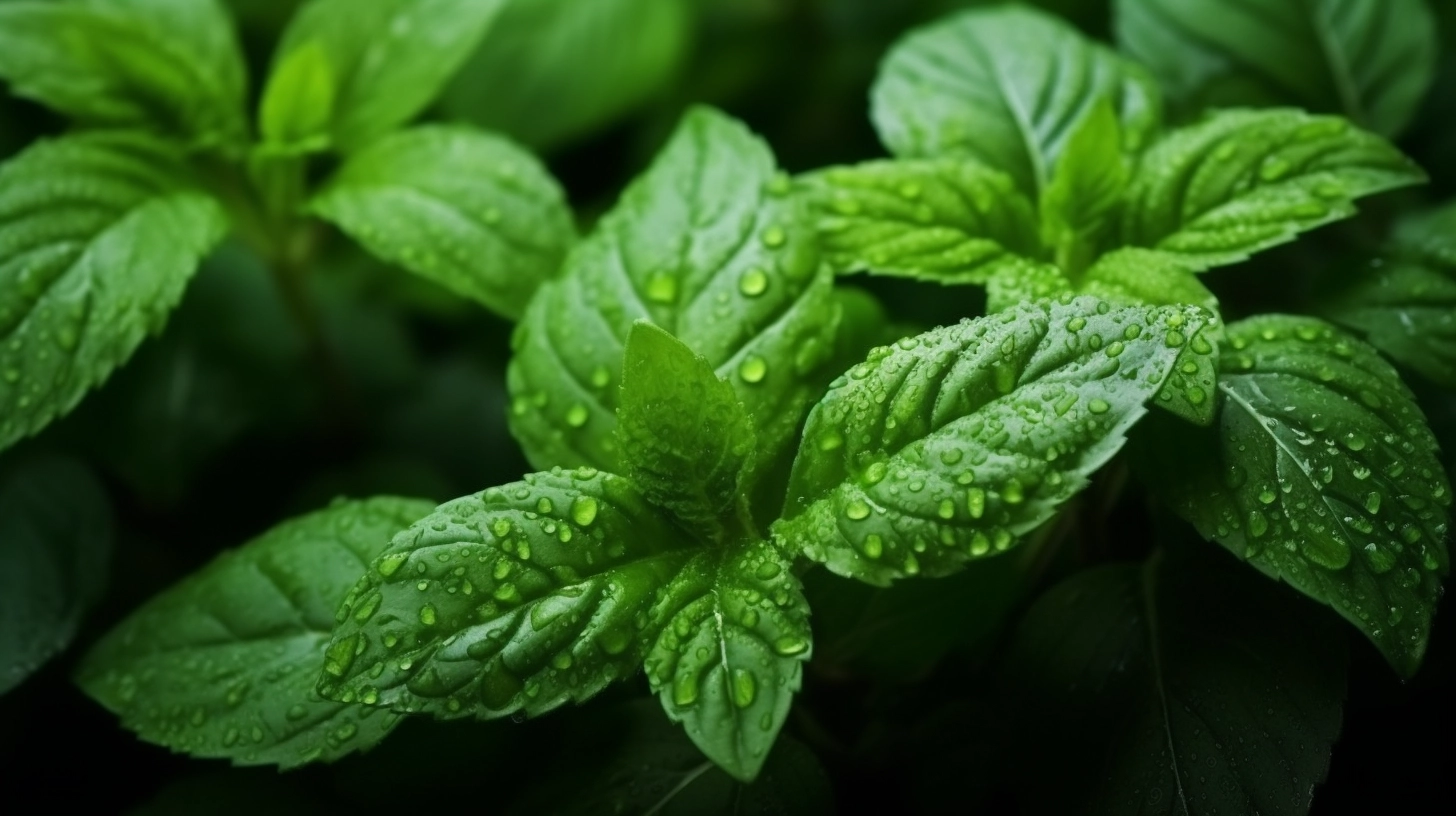
    1. Lamiaceae (Mint Family):

    Origins: The Lamiaceae family, commonly known as the mint family, is believed to have originated in the Mediterranean region. It has since spread across the globe.

    Morphology: Lamiaceae plants are characterized by square stems, aromatic leaves with glandular trichomes, and often have tubular flowers. They exhibit a wide range of growth habits, from low-lying ground covers to tall shrubs.

    Environment: Many Lamiaceae species thrive in temperate and subtropical regions. They are often found in sunny, well-drained soils and are known for their drought tolerance. Examples include mint (Mentha spp.), basil (Ocimum basilicum), and rosemary (Rosmarinus officinalis).

    Common Characteristics:Aromatic Leaves: Lamiaceae plants are known for their aromatic leaves, often filled with essential oils that emit fragrant scents.

    Culinary and Medicinal Uses: Herbs like mint, basil, rosemary, and thyme belong to this family and are celebrated for their culinary and medicinal applications.

    Refreshing and Invigorating: The fragrances of mint family herbs are often refreshing, invigorating, and widely used in cooking, teas, and aromatherapy.

    2. Rutaceae (Rue or Citrus Family):

    Origins: The Rutaceae family, known as the citrus family, has its origins in tropical and subtropical regions, particularly in Southeast Asia.

    Morphology: Rutaceae plants are woody shrubs or small trees with aromatic leaves. They produce fragrant flowers, often with five petals, and bear fruits with distinctive oil glands containing essential oils.

    Environment: Citrus trees, a prominent member of this family, thrive in warm, subtropical climates with well-drained soils. They are cultivated in regions such as the Mediterranean, Florida, and California. Other Rutaceae members include rue (Ruta spp.) and kumquat (Fortunella spp.).

    Common Characteristics:Citrus Delights: The Rutaceae family encompasses citrus trees, including oranges, lemons, limes, and grapefruits, known for their zesty and uplifting fragrances.

    Essential Oils: Citrus peels are rich in essential oils, widely used in perfumes, cosmetics, and culinary creations.

    Vibrant and Energizing: The scents from citrus fruits are known for their vibrancy and ability to uplift the spirits.

    3. Asteraceae (Aster or Sunflower Family):

    Origins: The Asteraceae family is widespread and diverse, with origins in various parts of the world, including North America, South America, and Europe.

    Morphology: Asteraceae plants are known for their composite flower heads, which consist of many tiny florets arranged in a central disk surrounded by petals. Aromatic members include chamomile (Matricaria spp.) and feverfew (Tanacetum parthenium).

    Environment: These aromatic plants grow in diverse environments, from meadows to mountain slopes. Chamomile, for example, prefers well-drained soils and is often found in temperate regions.

    Common Characteristics:Soothing Scents: Asteraceae includes aromatic herbs like chamomile, renowned for their soothing and calming fragrances, often used in teas and essential oils.

    Medicinal Uses: Many members of this family have been used in traditional medicine due to their aromatic properties.

    Diverse Aromas: While chamomile exudes a gentle aroma, other Asteraceae plants may offer a range of scents, from earthy to floral.

    4. Lauraceae (Laurel Family):

    Origins: Lauraceae, the laurel family, has origins in tropical and subtropical regions, including parts of Asia, Africa, and the Americas.

    Morphology: Lauraceae members are typically evergreen trees or shrubs with aromatic leaves. They produce small, inconspicuous flowers and bear fruits with single seeds. Bay laurel (Laurus nobilis) and cinnamon (Cinnamomum spp.) are notable examples.

    Environment: Lauraceae plants thrive in warm, humid climates. Bay laurel is native to the Mediterranean region, while cinnamon trees are primarily grown in tropical areas with well-drained soils.

    Common Characteristics:Fragrant Leaves and Bark: Lauraceae includes aromatic trees and shrubs like bay laurel and cinnamon, known for their fragrant leaves and bark.

    Culinary Significance: Bay leaves are used as a culinary herb, imparting a unique aroma to dishes.

    Sweet and Spicy: Cinnamon bark is celebrated for its sweet and spicy fragrance, making it a prized spice in both cooking and perfumery.

    5. Apiaceae (Carrot or Parsley Family):

    Origins: The Apiaceae family has a diverse global distribution, with origins in various regions, including Europe, Asia, and North America.

    Morphology: Aromatic members of the Apiaceae family are characterized by compound umbels, which consist of small flowers arranged in umbrella-like clusters. Plants like parsley (Petroselinum crispum), dill (Anethum graveolens), and cilantro (Coriandrum sativum) belong to this family.

    Environment: These herbs thrive in temperate climates with well-drained soils. They often grow as annuals and prefer full sun to partial shade.

    Common Characteristics:Culinary Delights: Aromatic plants like dill, parsley, and cilantro belong to Apiaceae, appreciated for their culinary seasonings and garnishes.

    Distinct Aromas: Each herb in this family carries a unique aroma, enhancing the flavors of various dishes.

    Versatile Scents: From the freshness of parsley to the pungency of cilantro, Apiaceae herbs cater to diverse culinary preferences.

    6. Myrtaceae (Myrtle Family):

    Origins: The Myrtaceae family is predominantly found in tropical and subtropical regions, with origins in areas such as Australia, Southeast Asia, and South America.

    Morphology: Myrtaceae plants are characterized by aromatic leaves and typically have showy, five-petaled flowers. Notable members include eucalyptus (Eucalyptus spp.), tea tree (Melaleuca spp.), and cloves (Syzygium aromaticum).

    Environment: Eucalyptus trees are iconic in Australia and thrive in diverse environments, from temperate to arid regions. Clove trees prefer tropical climates with well-drained soils. Tea tree species are often found in wetlands and swampy areas.

    Common Characteristics:Aromatic Leaves and Fruits: Myrtaceae includes aromatic plants like eucalyptus, tea tree, and cloves, known for their aromatic leaves and fruits.

    Medicinal and Culinary Uses: Eucalyptus leaves provide essential oils with menthol-like scents used in medicinal products, while cloves offer a warm, spicy aroma for culinary creations.

    These details highlight the origins, morphology, and typical environments of some of the most well-known aromatic plant families. Understanding these characteristics can deepen our appreciation for the diverse world of aromatic herbs, spices, and botanical wonders that have enriched human culture and cuisine for centuries.

  • The Seven Alchemical Processes of The Soul

    The Seven Alchemical Processes of The Soul

    The Seven Stages of Alchemical Transformation are a spiritual metaphor that represent the journey of transformation from the base state of consciousness to a higher state of being. Each stage represents a different aspect of this transformation, and each stage builds upon the previous one. Here’s a brief overview of each stage:

    1.Calcination

    This stage represents the breaking down of the old self and the burning away of impurities. It’s a process of purification and transformation through intense heat and pressure. The stage represents a period of intense challenge, where our existing beliefs and habits are tested and often broken down. It’s like going through a difficult time in our lives that forces us to confront our weaknesses and grow stronger as a result.

    2. Dissolution

    In this stage, the purified self is dissolved into its constituent parts, representing the breaking down of the ego and the dissolution of old patterns and beliefs. During this stage, we begin to let go of the parts of ourselves that no longer serve us. This can involve shedding old patterns of behavior, releasing past traumas, or letting go of relationships that are no longer healthy for us.

    3.Separation

    The third stage represents the separation of the purified self from the old self, as well as the separation of the individual from the collective consciousness. During this stage, we start to develop a clearer sense of our own identity and separate ourselves from the expectations and opinions of others. We learn to trust our own instincts and make decisions that align with our values, even if they go against the expectations of those around us.

    4.Conjunction

    In this stage, the purified self is reunited with the collective consciousness, representing the integration of the individual into the larger whole. This stage involves integrating our newfound sense of self with the world around us. We begin to see ourselves as part of a larger whole and recognize our interconnectedness with others. This can involve developing deeper relationships with loved ones or finding ways to contribute to our communities.

    5.Fermentation

    This stage represents the transformation of the purified self into something new and different, through the process of fermentation. In this stage, we start to experiment with new ways of being and thinking. We allow ourselves to be curious and open to new experiences, even if they take us out of our comfort zone. This can lead to breakthroughs in our personal growth and the discovery of hidden talents and passions.

    6.Distillation

    In this stage, the new self is purified even further, through the process of distillation. This represents the refinement of the self and the elevation to a higher state of consciousness. During this stage, we start to refine our understanding of who we are and what we want out of life. We focus on the things that truly matter to us and let go of distractions and superficial desires. This can involve developing a clearer sense of purpose or refining our goals and aspirations.

    7.Coagulation

    The final stage represents the solidification of the new self, as well as the integration of the new self into the physical world. It’s a process of grounding and manifestation, as the new self becomes fully realized and integrated into daily life. This stage is about grounding our newfound sense of self in the physical world. We take practical steps to bring our vision into reality and make a tangible impact on the world around us. This can involve pursuing a career that aligns with our values, starting a business, or engaging in activism or social justice work.

    These stages are not necessarily linear, and individuals may go through them in different orders or experience some stages more intensely than others. However, they provide a useful framework for understanding the process of spiritual transformation and the journey towards a higher state of consciousness.

  • What Is The Alchemy Of The Soul?

    What Is The Alchemy Of The Soul?

    The alchemy of the soul is a metaphorical concept that refers to the process of spiritual transformation and inner growth. It draws its inspiration from the ancient practice of alchemy, which sought to transmute base metals into gold. In the same way, the alchemy of the soul seeks to transform the inner self, turning negative qualities into positive ones, and unlocking the full potential of the individual.

    The alchemy of the soul involves a process of self-discovery and inner work, where individuals delve into their subconscious to confront and transform their negative patterns, emotions, and beliefs. This process can be painful and challenging, but ultimately leads to greater self-awareness, inner peace, and spiritual growth.

    The alchemy of the soul is a deeply personal and individual journey, as each person has their own unique challenges and obstacles to overcome. However, the use of transformative tools like meditation, journaling, and essential oils can support and enhance this process, helping individuals to access deeper levels of consciousness and to release emotional blockages that may be holding them back.

    Ultimately, the alchemy of the soul is a lifelong journey, as we continue to evolve and grow throughout our lives. It requires courage, self-reflection, and a willingness to confront our innermost selves, but the rewards are immense, as we connect with our true essence and live a more fulfilling and authentic life.

  • Why How We Use Plants Matters: The Ethics of Working with Essential Oils

    Why How We Use Plants Matters: The Ethics of Working with Essential Oils

    The Ethics of Essence: What it Means to be a Plant’s Ambassador

    In the modern world, we are taught to view nature as a “resource”—something to be harvested, processed, and consumed for our own benefit. We look at an essential oil and see a tool for our health or a scent for our home. But in the Earth School, we learn a different perspective.

    To work with Scent Alchemy is to step into the role of a Plant’s Ambassador. It is a move away from the “Warrior” mindset of conquering nature and toward the “Gardener” mindset of collaborating with it. When we open a bottle of essence, we aren’t just using a product; we are inviting a living intelligence to partner with our own.

    The Intelligence of the Aroma

    A plant does not produce aromatic molecules for our benefit. It produces them for its own survival, communication, and healing.

    Resins are the “scabs” of a tree, created to seal wounds and prevent infection.

    Florals are the plant’s “social frequency,” designed to attract connection and ensure the future.

    Roots are the plant’s “data storage,” anchoring it to the earth and gathering minerals.

    As a Scent Alchemist, I recognize that when we use these oils, we are borrowing the plant’s lived wisdom. If we take that wisdom without respect or recognition, the frequency remains “flat.” But when we approach the plant as an ambassador, we unlock the full depth of its botanical code.

    The Three Pillars of Ambassadorship

    Being an ambassador for the plants means holding a high standard for how these essences are sourced and shared. This is why I focus on three core ethics:

    1. Recognition over Extraction

    We acknowledge that every drop of oil is the “soul” of a plant that lived, breathed, and survived in a specific landscape. We do not treat it as a commodity, but as a guest in our Internal Landscape.

    2. Guarding the Origin

    A plant’s message is only as clear as the soil it grew in. As an ambassador, I am committed to finding “True Nodes”—suppliers and distillers who respect the land and the local communities. If a plant is harvested in a way that creates “trauma” in the garden, that frequency is carried into the oil. We seek the frequency of Harmony.

    3. Translation, Not Decoration

    My role is not to “flavor” your life, but to translate the plant’s message for your nervous system. An ambassador speaks two languages. I speak the language of the plants, and I speak the language of the human soul. My work is to help you hear what the Spiritus Aromatica is saying to you.

    Moving from “Consumer” to “Gardener”

    When you use an oil from this perspective, your entire experience changes. You no longer just “put on a scent.” You enter into a relationship. You begin to tend to your own “Internal Garden” with the same reverence that a gardener tends to the earth.

    Are you ready to meet the plants as partners?

    In our Inner Mapping Sessions, we practice the “Ethics of Essence.” We learn to approach the botanicals not as things to be used, but as mentors to be heard. Together, we find the specific plant allies that are ready to advocate for your growth and stability.

    [Become a Partner with the Garden: Book a Session →]

    You Are Part of a Living Network

    You are not an isolated island; you are like a tree in a vast, interconnected forest. I call this collective space the Digital Garden. Just as one healthy tree helps stabilize the soil for the entire forest, your choice to treat nature with respect and recognition helps stabilize the world around you. When you move from “extraction” to “collaboration,” the frequency of your presence honors the entire network. You aren’t just tending to your own soul; you are tending to our shared garden.